Forget everything you know about modern slow cooking because we are traveling back to the dawn of culinary infrastructure. Imagine the scent of woodsmoke mingling with the earthy musk of toasted farro and the sharp, piquant bite of wild aromatics. This is the Etruscan Stew; a masterpiece of pre-Roman engineering that bridges the gap between nomadic survival and sophisticated agrarian luxury. We are not just making dinner; we are conducting a technical audit of a legume cereal hybrid that has survived millennia. The steam rising from the pot is thick and viscous, carrying the scent of rendered fats and infused herbs. It is a sensory overload that demands respect for the ancient artisans who mastered the art of the clay vessel. As an expert culinary infrastructure auditor, I am here to tell you that this dish is the gold standard of thermal efficiency and nutritional density. Prepare your palate for a journey into the heart of the Mediterranean iron age, where every bubble in the pot represents a calculated move in the game of gastronomic evolution.
THE DATA MATRIX
| Metric | Specification |
|---|---|
| Prep Time | 45 Minutes |
| Execution Time | 180 Minutes |
| Yield | 6 Standard Servings |
| Complexity (1-10) | 6.5 |
| Estimated Cost per Serving | $4.25 USD |
THE GATHERS
Ingredient Protocol:
- 500g / 1.1 lbs Beef Chuck or Wild Boar (cubed 2cm)
- 200g / 1 cup Pearled Farro (Cereal Component)
- 400g / 2 cups Dried Borlotti Beans (soaked 12 hours)
- 60ml / 4 tbsp Extra Virgin Olive Oil
- 150g / 1 large Yellow Onion (brunoise)
- 100g / 2 medium Carrots (small dice)
- 100g / 2 stalks Celery (small dice)
- 30g / 4 cloves Garlic (minced)
- 15g / 1 tbsp Tomato Paste (Double Concentrated)
- 1.5L / 6 cups Bone Broth (Unsalted)
- 5g / 1 tsp Dried Oregano
- 2g / 0.5 tsp Red Pepper Flakes
- 10g / 2 tsp Sea Salt
- Fresh Rosemary and Thyme sprigs
Section A: Ingredient Quality Audit:
If your farro lacks a nutty aroma upon opening the bag, it is likely oxidized. To fix this, toast the dry grains in a stainless steel pan for three minutes until they release a popcorn-like scent. If your beans refuse to soften after hours of simmering, you likely have "hard water" interference or ancient, desiccated legumes. Add a pinch of baking soda to the soaking liquid to break down the hemicellulose in the bean skins. Finally, ensure your olive oil is harvest-dated; if it tastes greasy rather than peppery, it will fail to provide the necessary polyphenols to balance the heavy proteins.
THE MASTERCLASS

1. Thermal Priming and Protein Sealing
Begin by heating your heavy-bottomed saucier or Dutch oven over medium-high heat. Pat the meat dry with paper towels to ensure maximum surface contact. Add half the olive oil and sear the protein in batches. You are looking for a deep mahogany crust, the result of the Maillard reaction. Do not crowd the pan, or the meat will steam in its own juices rather than brown.
Pro Tip: Use a digital scale to ensure even protein portions. The science here is heat flux; dry meat surfaces reach the 154C (310F) threshold for browning much faster than damp ones, preventing the interior from overcooking.
2. The Aromatics Infrastructure
Remove the meat and lower the heat. Add the remaining oil and the onion, carrot, and celery (the soffritto). Use a bench scraper to efficiently move your prepped vegetables from the cutting board to the pot. Sauté until the onions are translucent and the carrots have softened slightly, picking up the fond from the bottom of the vessel.
Pro Tip: This stage is about lipid-soluble flavor extraction. Many of the aromatic compounds in onions and garlic are released more effectively in fat than in water, creating a foundational flavor layer.
3. Deglazing and Cereal Integration
Stir in the tomato paste and cook for two minutes until it darkens to a rusty red. This removes the "raw" metallic taste. Add the toasted farro and soaked beans, stirring to coat every grain in the flavored fats. Pour in 250ml of the broth to deglaze the pot, scraping up every bit of caramelized protein.
Pro Tip: Deglazing is a chemical cleaning process. The liquid dissolves the browned sugars and proteins (the fond), incorporating them into the liquid phase of the stew for a more complex profile.
4. The Long-Phase Simmer
Add the remaining broth, herbs, and the seared meat. Bring the mixture to a boil, then immediately drop the heat to the lowest possible setting. Cover with a tight-fitting lid to prevent evaporation. The goal is a gentle convection current within the pot that cooks the legumes and cereals without shattering them.
Pro Tip: Use an infrared thermometer to check the surface temperature of the liquid. It should hover around 85C to 90C (185F to 195F). This temperature allows collagen to transform into gelatin without boiling the meat into tough fibers.
5. Texture Calibration and Aeration
Once the beans are creamy and the farro is tender but "al dente," remove the lid. If the liquid is too thin, crush a few beans against the side of the pot with a wooden spoon. This releases starches that act as a natural thickener. Remove the woody herb stems before serving.
Pro Tip: Let the stew rest for fifteen minutes before plating. This allows the proteins to reabsorb some of the liquid and the starches to set, resulting in a more viscous and cohesive mouthfeel.
Section B: Prep & Timing Fault-Lines:
The most common failure in this technical audit is the "crunchy bean" syndrome. This occurs when acidic elements like tomato paste are added too early or in too high a concentration before the beans have fully hydrated. Acid strengthens the cell walls of legumes, preventing them from softening. Always ensure your beans have reached a "give" state before introducing heavy acidity. Furthermore, if your farro turns to mush, you have likely used "pearled" farro while following a "whole grain" time table. Adjust your timer based on the specific processing of the grain.
THE VISUAL SPECTRUM
Section C: Thermal & Visual Troubleshooting:
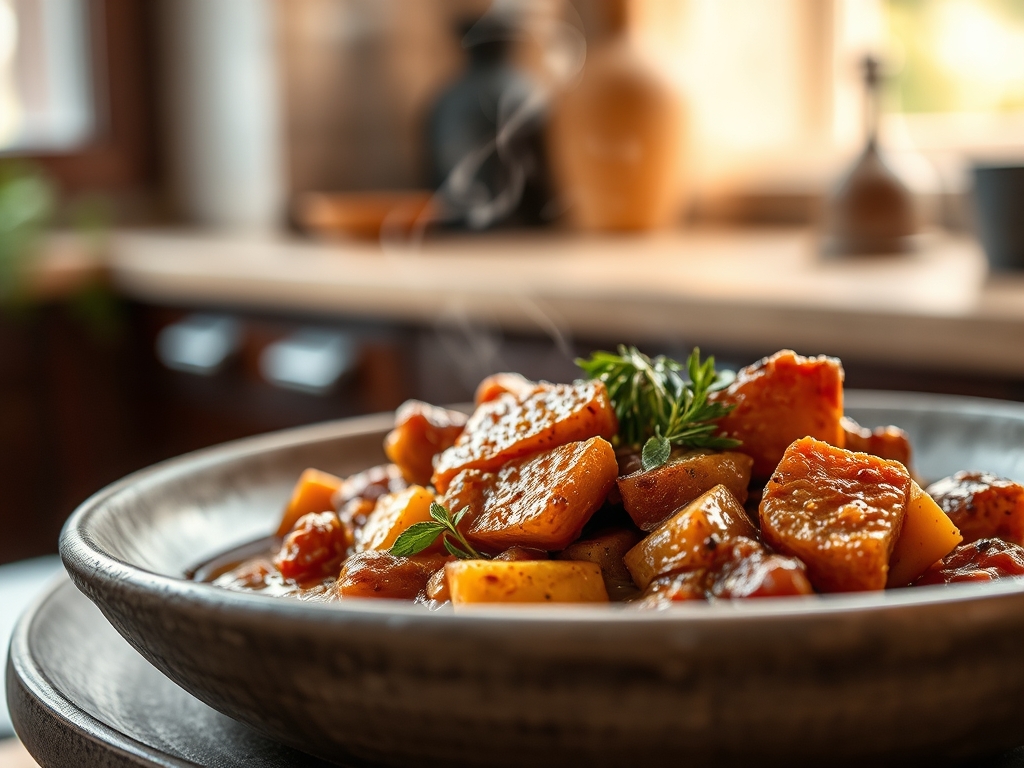
Referencing the Masterclass photo, your Etruscan Stew should exhibit a rich, variegated color palette. If your stew looks pale and "washed out," you likely skipped the Maillard browning phase or failed to cook the tomato paste long enough. If the liquid is oily and separated, your emulsion has broken; fix this by vigorously stirring in a splash of hot broth to reintegrate the fats. The farro should appear plump and distinct, not like a uniform paste. If the vegetables have disappeared, they were cut too small for a three-hour simmer; aim for a uniform 1cm dice next time to maintain structural integrity.
THE DEEP DIVE
- Macro Nutrition Profile: This dish is a powerhouse of slow-release carbohydrates and complete proteins. A single serving provides approximately 450 calories, 32g of protein, 12g of fiber, and 15g of healthy fats. The combination of legumes and cereals ensures a full amino acid profile, making it a "complete" meal.
- Dietary Swaps: For a Vegan audit, replace the meat with smoked king oyster mushrooms and use vegetable umami broth. For Gluten-Free requirements, swap the farro for sorghum or buckwheat groats, which offer a similar structural resistance. Keto versions are difficult due to the starch content, but one could increase the meat ratio and swap legumes for cauliflower florets added in the last 20 minutes.
- Meal Prep & Reheating Science: This stew is actually better on day two. As it cools, the starches undergo retrogradation, and the flavors continue to marry. When reheating, add a splash of water or broth to loosen the gelatinized liquid. Use low heat to avoid scorching the bottom starches.
THE KITCHEN TABLE
Can I use canned beans for this audit?
You can, but you sacrifice the starch-driven viscosity of the cooking liquid. If using canned, add them in the final 30 minutes of simmering to prevent them from disintegrating into a grainy mash.
What if my stew is too salty?
Do not panic. Drop a peeled, halved potato into the pot for the final 20 minutes of simmering. The potato acts as a sponge, absorbing excess salt. Remove and discard the potato before serving.
Is farro the only grain allowed?
While farro is historically accurate for an Etruscan profile, spelt or barley are acceptable substitutes. They offer similar gluten structures and nutty flavor profiles that withstand the long thermal exposure of a slow simmer.
How do I achieve that deep red color?
The secret is the "pinçage" technique. You must sauté the tomato paste until it turns from bright red to a deep, brick-like maroon. This caramelizes the sugars and provides the dark, savory visual base.