Imagine standing in the center of a bustling Marrakech souk where the air is thick with the scent of ancient commerce and pulverized botanical wonders. You are not just looking for a seasoning; you are hunting for the "Head of the Shop." Moroccan Ras el Hanout is the undisputed king of spice clusters. It is a complex, multi-layered architectural marvel of flavor that can contain anywhere from a dozen to over fifty individual components. This is not a mere condiment; it is a high-stakes engineering project for your palate. When executed correctly, the blend offers a piquant heat that vibrates against the roof of your mouth while deep, earthy undertones of cumin and turmeric provide a grounded foundation. We are looking for a profile that is simultaneously floral, woody, and sharp. If your current spice rack feels like a collection of dusty relics, it is time for a technical audit. We are going to deconstruct this legendary blend to ensure every molecule of volatile oil is pressurized and primed for maximum aromatic impact.
THE DATA MATRIX
| Metric | Specification |
|---|---|
| Prep Time | 20 Minutes |
| Execution Time | 10 Minutes |
| Yield | 120g / 1.25 Cups |
| Complexity (1-10) | 7 |
| Estimated Cost per Serving | $0.45 |
THE GATHERS
Ingredient Protocol:
- 30g / 4 tbsp Whole Cumin Seeds
- 30g / 4 tbsp Whole Coriander Seeds
- 15g / 2 tbsp Whole Black Peppercorns
- 10g / 1.5 tbsp Ground Turmeric (High Curcumin Content)
- 10g / 1.5 tbsp Ground Ginger
- 5g / 1 tsp Whole Cloves
- 5g / 1 tsp Allspice Berries
- 5g / 1 tsp Green Cardamom Pods (Seeds removed from husks)
- 3g / 0.5 tsp Ground Nutmeg
- 3g / 0.5 tsp Ground Cinnamon (Ceylon preferred)
- 2g / 0.25 tsp Crushed Red Pepper Flakes
- 1g / 0.15 tsp Saffron Threads (Hand-crushed)
- 1g / 0.15 tsp Dried Lavender Buds (Culinary grade)
Section A: Ingredient Quality Audit:
The primary failure point in spice layering is the use of pre-ground, oxidized powders. If your cumin smells like dusty cardboard rather than a musky, citrus-heavy punch, it is functionally dead. Technical Fix: Always source whole seeds. If you find your spices lack a viscous oil sheen when crushed, they have been stored in UV light for too long. To resuscitate older whole spices, perform a "Flash Temper" by tossing them in a dry saucier for 30 seconds before grinding. If your turmeric is dull orange rather than vibrant neon, it lacks the essential curcumin density required for a proper infuse cycle. Replace it immediately with a single-origin variety.
THE MASTERCLASS
Step 1: The Thermal Activation Phase
Place your whole cumin, coriander, peppercorns, cloves, and cardamom seeds into a heavy-bottomed saucier. Apply medium-high heat while constantly agitating the pan. You are looking for the exact moment the first puff of smoke appears. This indicates the volatile oils have reached their boiling point and are migrating to the surface of the seed coat.
Pro Tip: This process, known as the Maillard reaction in seeds, transforms raw, bitter compounds into complex, nutty aromatics. Use an infrared thermometer to ensure the pan surface stays between 325F and 350F to avoid scorching the delicate oils.
Step 2: Precision Weight and Measurement
Transfer the toasted seeds to a cooling tray immediately. Once cooled to room temperature, use a digital scale to verify the weights against the protocol. Spices lose mass during toasting due to moisture evaporation; recalibrating your ratios at this stage ensures the final blend remains balanced rather than skewed by water loss.
Pro Tip: Precision is the difference between a professional blend and a kitchen accident. A digital scale with 0.1g increments is non-negotiable for high-level spice architecture where 1 gram of cloves can easily overpower 30 grams of coriander.
Step 3: Mechanical Pulverization
Transfer the toasted seeds and the remaining ground spices into a high-speed burr grinder or a heavy granite mortar and pestle. Process until the texture is uniform and fine. Use a bench scraper to gather any residue from the work surface to ensure no "flavor dust" is wasted.
Pro Tip: Grinding creates friction and heat. If using an electric grinder, pulse in short bursts to prevent the heat from cooking the oils, which can lead to a bitter, "burnt" aftertaste in the final infuse stage.
Step 4: The Saffron and Floral Integration
Add the hand-crushed saffron threads and lavender buds last. These are highly delicate aromatics that do not require thermal activation. Stir them into the pulverized mixture using a small whisk to ensure even distribution throughout the matrix.
Pro Tip: Saffron contains picrocrocin and safranal, which are sensitive to high heat. By adding them post-grind, you preserve the floral "top notes" that define a premium Ras el Hanout.
Section B: Prep & Timing Fault-Lines:
The most common human error is "The Heat Overrun." If you leave spices in a hot pan after turning off the burner, the residual thermal energy will continue to render the oils until they turn acrid. Technical Fix: Have a cold ceramic bowl ready to receive the spices the second they become fragrant. Another fault-line is "The Moisture Trap." If you grind spices while they are still warm, condensation will form inside your storage jar. This creates a clumping effect and invites microbial growth. Always wait for a full thermal equilibrium before sealing.
THE VISUAL SPECTRUM
Section C: Thermal & Visual Troubleshooting:
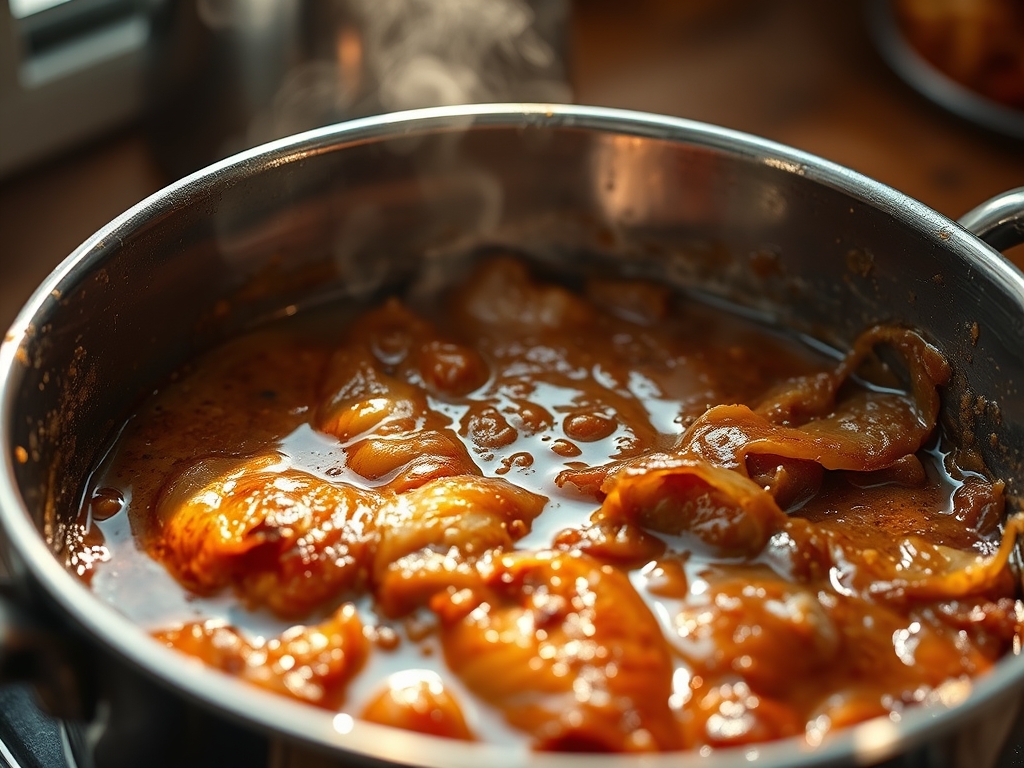
Look closely at the Masterclass photo. You should see a variegated texture with flecks of deep burnt orange, golden yellow, and charcoal black. If your blend appears as a uniform, muddy brown, you have over-toasted the seeds or over-processed the grind. If the color is too pale, your turmeric is likely low-grade or your peppers were not properly dried.
Visual Cues from the Audit:
- Uneven Browning: This suggests the saucier was not agitated enough during the thermal phase.
- Dull Colors: This is a sign of oxidation. If the saffron does not pop against the darker seeds, the spice is stale.
- Texture: The final product should look like fine kinetic sand. If it looks like flour, it is over-ground; if it looks like pebbles, it will not infuse properly into your fats.
THE DEEP DIVE
Macro Nutrition Profile:
Per 1 tablespoon serving: 25 Calories, 1.2g Fat, 4g Carbohydrates, 2g Fiber, 0.8g Protein. This blend is a powerhouse of antioxidants, particularly manganese and iron from the cumin and black pepper.
Dietary Swaps:
- Vegan/Keto/GF: This blend is naturally compliant with all three. For Keto enthusiasts, the high oil content in the seeds provides excellent fat-soluble flavor delivery.
- Low-Sodium: This protocol contains zero added salt, allowing the chef to control salinity during the final cooking phase.
Meal Prep & Reheating Science:
To maintain the molecular structure of the volatile oils, store the blend in an airtight glass container in a cool, dark cabinet. Do not store near the stove. When reheating a dish containing Ras el Hanout, add a splash of water or stock to deglaze the pan; this re-hydrates the spice particles and prevents them from sticking and burning during the second thermal cycle.
THE KITCHEN TABLE
How long does the potency last?
In an airtight glass vessel, the aromatic peak lasts 60 days. After 90 days, the volatile oils begin to dissipate, and the blend loses its piquant edge. Always smell before use; if the "punch" is gone, discard it.
Can I use a blender instead of a grinder?
A blender's blades are designed for liquids and may create uneven particle sizes in dry spices. A dedicated spice grinder or mortar and pestle is superior for achieving the necessary surface area for a proper infuse cycle.
Why is my blend so bitter?
Bitterness usually stems from over-toasting the cumin or using too much clove. Cloves contain high levels of eugenol, which is medicinal and numbing in high concentrations. Audit your measurements with a digital scale to ensure the ratio is exact.
Does Ras el Hanout need to be cooked?
While it can be used as a dry rub, its flavors are best realized when bloomed in fat. Aerate the spice in warm oil or butter for 60 seconds before adding liquids to fully unlock the complex aromatic layers.