Imagine the sweltering heat of a Mediterranean sun beating down on stone vats filled with salt and entrails. This is not a scene of decay; it is a masterclass in controlled enzymatic destruction. Roman Garum was the liquid gold of the ancient world; a salty, amber nectar that provided the backbone of flavor for an empire. To the uninitiated, the process sounds like a biohazard. To the expert culinary auditor, it is a glorious display of proteolytic breakdown. We are talking about the deliberate autolysis of fish proteins into their constituent amino acids; specifically, the liberation of glutamic acid to create an umami bomb that dwarfs modern soy sauce. This sauce was so vital to Roman logistics that it was produced on an industrial scale from Iberia to the Levant. It is pungent, it is viscous, and it is the ultimate test of a chef's patience and sanitation protocols. Forget your delicate reductions. We are diving into the high-stakes world of ancient fermentation where salt is the only thing standing between a gourmet masterpiece and total putrefaction.
THE DATA MATRIX
| Metric | Specification |
|---|---|
| Prep Time | 45 Minutes |
| Execution Time | 60 to 90 Days (Fermentation) |
| Yield | 750ml / 3 Cups |
| Complexity (1-10) | 8 (Requires strict environmental control) |
| Estimated Cost per Serving | $0.45 |
THE GATHERS
Ingredient Protocol:
- 1 kg / 2.2 lbs Small oily fish (Anchovies, Sardines, or Mackerel)
- 250g / 8.8 oz Sea salt (Non-iodized is mandatory)
- 50g / 1.7 oz Dried Oregano
- 30g / 1.1 oz Dried Lovage or Celery Seed
- 15g / 0.5 oz Black Peppercorns
- 500ml / 2 cups Filtered water (Chlorine-free)
Section A: Ingredient Quality Audit:
The primary failure point in Roman Garum is the use of sub-par fish. If your raw material is already past its prime, the proteolytic breakdown will be overtaken by bacterial spoilage. Ensure your fish have clear eyes and a firm texture. If you can only source frozen fish, ensure they are thawed slowly in a refrigerated environment to prevent excessive cell wall rupture. Another common audit failure is using iodized salt. Iodine acts as an antimicrobial agent that can stall the specific halophilic bacteria required for a successful ferment. If your salt contains anti-caking agents, the final liquid may appear cloudy rather than clear and amber. Use high-purity sea salt to ensure a clean infuse of flavor.
THE MASTERCLASS
Step 1: The Mechanical Breakdown
Begin by cleaning your fish, but do not discard the viscera. The guts contain the essential enzymes (pepsin and trypsin) required for fermentation. Use a sharp chef's knife or a bench scraper to roughly chop the fish into 2cm pieces. This increases the surface area for salt contact.
Pro Tip: Use a digital scale to ensure your salt-to-fish ratio is exactly 25% by weight. This is the "Goldilocks zone" where pathogens are suppressed but enzymatic activity remains high.
Step 2: Stratification and Salting
In a large glass or ceramic vessel, layer the fish with the salt and dried herbs. The herbs act as antioxidants and flavor enhancers. Ensure the top layer is a solid "cap" of salt to prevent aerobic mold growth at the surface.
Pro Tip: Use a saucier or a heavy weight to press the mixture down. This excludes oxygen and forces the moisture out of the fish cells through osmosis, creating the initial brine.
Step 3: The Fermentation Cycle
Place the vessel in a warm, consistent environment (ideally 30C to 40C). Stir the mixture once a day for the first week to aerate the top layer and redistribute the enzymes. After the first week, seal the vessel with cheesecloth and a rubber band.
Pro Tip: If the ambient temperature is too low, use a fermentation heat mat. Consistent thermal energy accelerates the render of proteins into liquid amino acids.
Step 4: Extraction and Filtration
After 60 to 90 days, the solids should be almost entirely liquefied. Strain the mixture through a fine-mesh chinois lined with several layers of cheesecloth. Do not press the solids; let gravity do the work to maintain clarity.
Pro Tip: Use a refractometer to check the salinity of the final product. A high-quality garum should be stable at room temperature due to its salt concentration.
Section B: Prep & Timing Fault-Lines:
The most common human error is impatience. If you harvest the garum too early, the flavor will be "fishy" rather than "savory." The viscous quality of the sauce only develops after the long-chain proteins have been fully dismantled. Conversely, if the temperature fluctuates wildly, you risk "stalling" the ferment. If you notice a "rotten egg" smell rather than a "cheesy, salty" aroma, your salt concentration was likely too low or your vessel was not properly sanitized. Dispose of the batch and audit your sanitation protocol using a peracetic acid solution or high-heat sterilization.
THE VISUAL SPECTRUM
Section C: Thermal & Visual Troubleshooting:
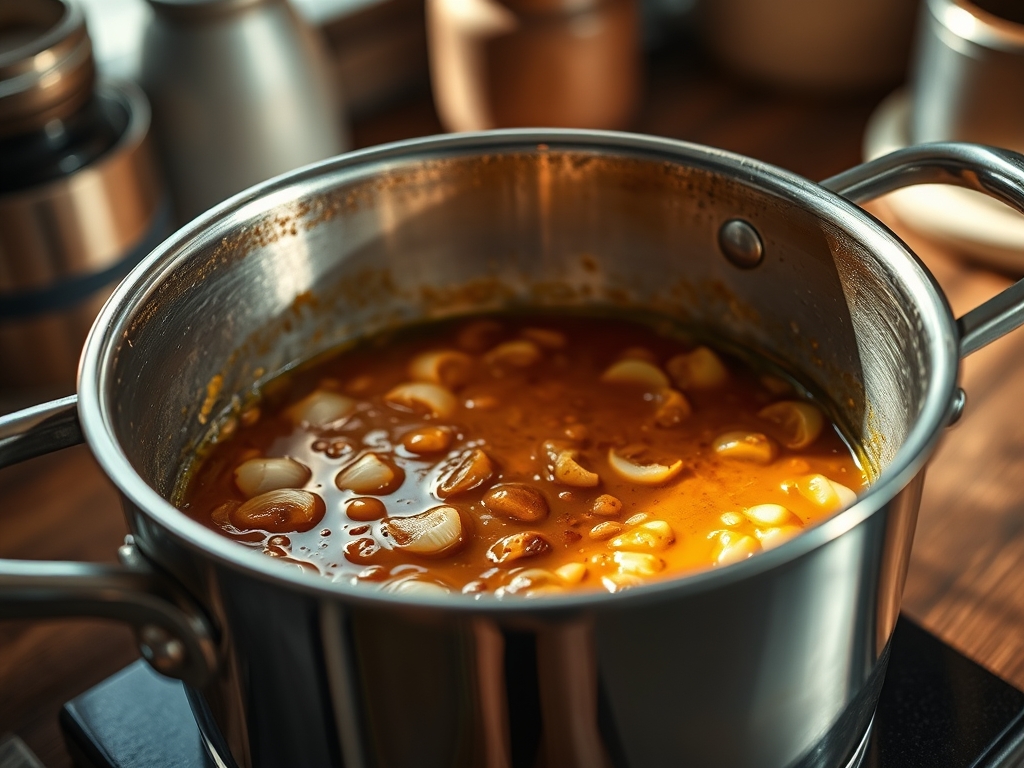
Referencing the Masterclass photo, your garum should possess a deep, translucent amber hue. If the liquid is opaque or grey, it indicates that the fish were not fresh or that the render happened in an anaerobic environment without enough salt.
- Dull Colors: This usually stems from oxidized fats. Ensure the surface is always covered by brine.
- Uneven Browning: In a fermented sauce, "browning" is actually a slow-motion Maillard reaction. If it looks patchy, your stirring schedule was inconsistent.
- Incorrect Texture: If the sauce is watery rather than slightly viscous, the enzymatic breakdown was incomplete. Extend the fermentation time by 14 days in a slightly warmer spot.
THE DEEP DIVE
Macro Nutrition Profile:
Garum is a concentrated source of protein and minerals. A single tablespoon contains approximately 2g of protein, 0g of fat, and 1200mg of sodium. It is exceptionally high in Vitamin B12 and essential amino acids like lysine and proline.
Dietary Swaps:
- Vegan: Substitute the fish with a mixture of dried shiitake mushrooms, dulse seaweed, and nutritional yeast. Use a koji-kin starter to mimic the proteolytic activity.
- Keto/GF: Traditional garum is naturally Keto and Gluten-Free as it contains no grains or sugars.
Meal Prep & Reheating Science:
Garum is a stable ferment. It does not require reheating; in fact, boiling it can destroy some of the complex aromatic compounds. When using it in hot dishes, add it at the very end to deglaze a pan or finish a sauce. This preserves the delicate volatile molecules created during the months of fermentation. Store in a dark glass bottle to prevent UV-induced lipid oxidation.
THE KITCHEN TABLE
How long does finished Garum last?
Due to the high salt content and low water activity, a properly filtered garum can last indefinitely at room temperature. For peak aromatic quality, consume within two years. Always store in an airtight glass container to prevent evaporation.
Can I use frozen fish?
Yes; however, the freezing process can damage the enzymes. To compensate, add a small amount of fresh fish guts or a pinch of bromelain powder to kickstart the proteolytic breakdown. Ensure the fish is fully thawed before salting.
What does it actually taste like?
Imagine the most intense, savory soy sauce you have ever tasted, combined with the funky, salty complexity of a high-end blue cheese. It is a piquant flavor enhancer that vanishes into a dish, leaving only a deep sense of "meatiness."
My garum has white crystals on top. Is it ruined?
No. Those are likely salt crystals or tyrosine "pearls" which are a sign of successful protein breakdown. As long as there is no colorful, fuzzy mold or a putrid odor, your audit remains in the green zone. Simply skim and continue.