Imagine the blistering heat of the Giza plateau vibrating against the limestone casing of the Great Pyramid. This is the birthplace of the world's most sophisticated carbohydrate infrastructure. We are not just talking about food; we are discussing the architectural marvel of Ancient Egyptian Bread. This isn't your grocery store's bleached white loaf. This is a high-density, nutrient-rich powerhouse forged from emmer wheat and wild-captured yeast. The smell is a complex tapestry of toasted grain, fermented honey, and the earthy musk of the Nile silt. Every crumb tells a story of a civilization that mastered the art of biological engineering before the invention of the wheel. To bake this bread is to interface with a five-thousand-year-old legacy of fermentation. It requires a reverence for the grain and a ruthless commitment to technical precision. We are about to deconstruct the molecular framework of the original sourdough, transforming raw emmer into a structural masterpiece that would make a Pharaoh's master baker weep with envy.
THE DATA MATRIX
| Metric | Specification |
|---|---|
| Prep Time | 45 Minutes (Active) |
| Execution Time | 24 Hours (Fermentation Included) |
| Yield | 2 Large Boules |
| Complexity (1-10) | 8 |
| Estimated Cost per Serving | $1.15 |
THE GATHERS
Ingredient Protocol:
- 500g / 4 cups Whole Grain Emmer Flour (Ancient Triticum dicoccum)
- 350ml / 1.5 cups Filtered Water (Room Temperature)
- 100g / 0.5 cup Active Sourdough Starter (The "Mother" Culture)
- 12g / 2 tsp Sea Salt
- 15ml / 1 tbsp Raw Wildflower Honey (Optional for browning)
- 20g / 2 tbsp Barley Malt Flour (For enzymatic activity)
Section A: Ingredient Quality Audit:
If your emmer flour feels gritty or lacks a nutty aroma, it has likely oxidized. Emmer is high in lipids; old flour will turn rancid and kill your yeast activity. Technical Fix: Sift the flour to aerate the particles and check for off-smells. If your sourdough starter is sluggish and fails to double in size within four hours, it is too acidic. Perform a "rescue feed" at a 1:5:5 ratio (starter:flour:water) to dilute the acetic acid and reinvigorate the yeast colony. If your water is heavily chlorinated, it will inhibit microbial growth. Use a carbon filter or boil and cool the water to ensure the chlorine has dissipated before mixing.
THE MASTERCLASS
1. The Autolyse Protocol
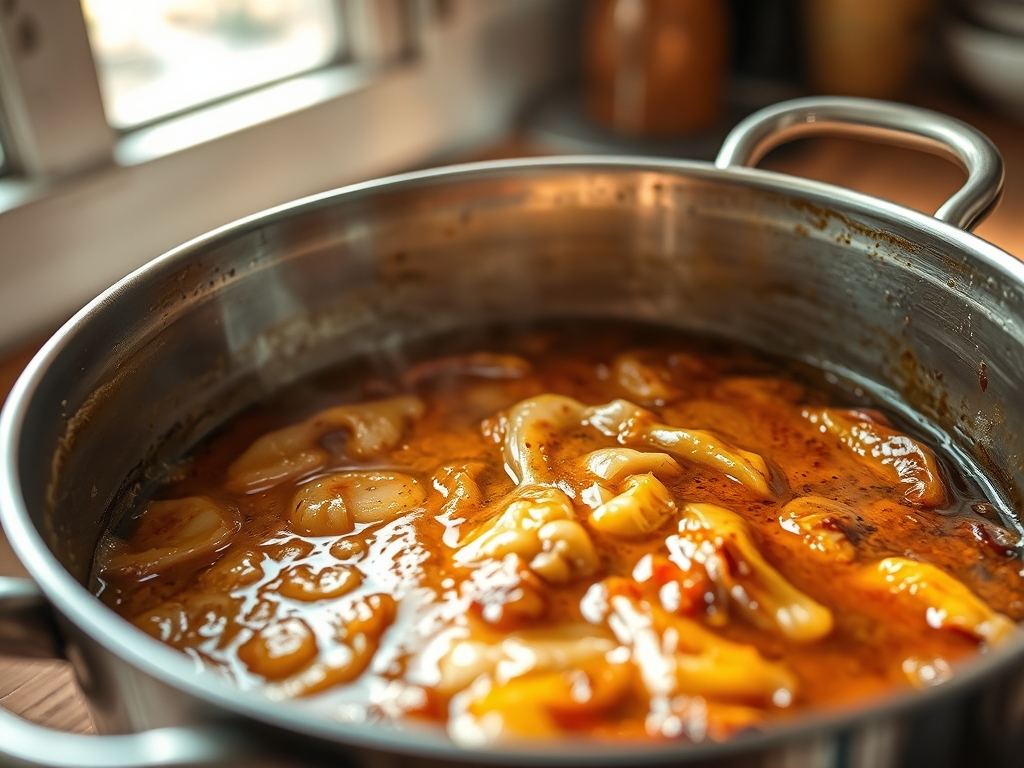
Combine your emmer flour and water in a stainless steel mixing bowl. Mix until no dry flour remains. Cover and let rest for 60 minutes. This allows the proteins to hydrate and begin forming a gluten network without the interference of salt or yeast.
Pro Tip: Use a digital scale for this step. Volumetric measurements are notoriously inaccurate with dense ancient grains. Precise hydration is the difference between a lofty loaf and a brick.
2. Microbial Integration
Add your active sourdough starter and honey to the hydrated flour. Use a "pincer" method with your hand to fold the starter into the dough until fully incorporated. This is where we infuse the dough with the life force of the Nile.
Pro Tip: A bench scraper is your best friend here. Emmer is stickier than modern wheat due to its different protein structure. Use the scraper to manage the dough on your work surface without adding excess flour.
3. Salt and Strength Building
Sprinkle the sea salt over the dough. Perform a series of "stretch and folds" every 30 minutes for the next two hours. This mechanical action aligns the gluten strands, creating a viscous yet elastic matrix capable of holding CO2.
Pro Tip: Wet your hands before touching the dough. Water acts as a natural non-stick coating, allowing you to manipulate the dough without tearing the fragile gluten sheath.
4. The Cold Fermentation
Place the dough in a proofing basket and move it to the refrigerator for 12 to 18 hours. This slows down the yeast but allows the lactic acid bacteria to produce the piquant tang and complex flavor profiles characteristic of traditional Egyptian loaves.
Pro Tip: Use a digital thermometer to ensure your fridge is at a steady 38 degrees Fahrenheit. Temperature fluctuations can lead to over-proofing, causing the dough to collapse during the bake.
5. The Thermal Shock
Preheat a Dutch oven or a heavy ceramic pot to 500 degrees Fahrenheit. Carefully flip the dough into the hot vessel and score the top with a sharp blade. The steam trapped inside the pot will allow the bread to expand fully.
Pro Tip: A professional bread lame is essential for scoring. Deep, deliberate cuts provide a "controlled explosion," preventing the crust from rupturing in unintended places.
Section B: Prep & Timing Fault-Lines:
The most common failure in ancient grain baking is over-fermentation. Because emmer has a weaker gluten structure than modern bread wheat, it can go from "perfect" to "puddle" in thirty minutes. If the dough feels "soupy" and won't hold its shape, shorten your room temperature bulk fermentation by an hour. Another timing error is the "cold-start" mistake. Never put your dough into an oven that hasn't been preheating for at least 45 minutes. The thermal mass of the pot must be fully saturated to render a proper crust.
THE VISUAL SPECTRUM
Section C: Thermal & Visual Troubleshooting:
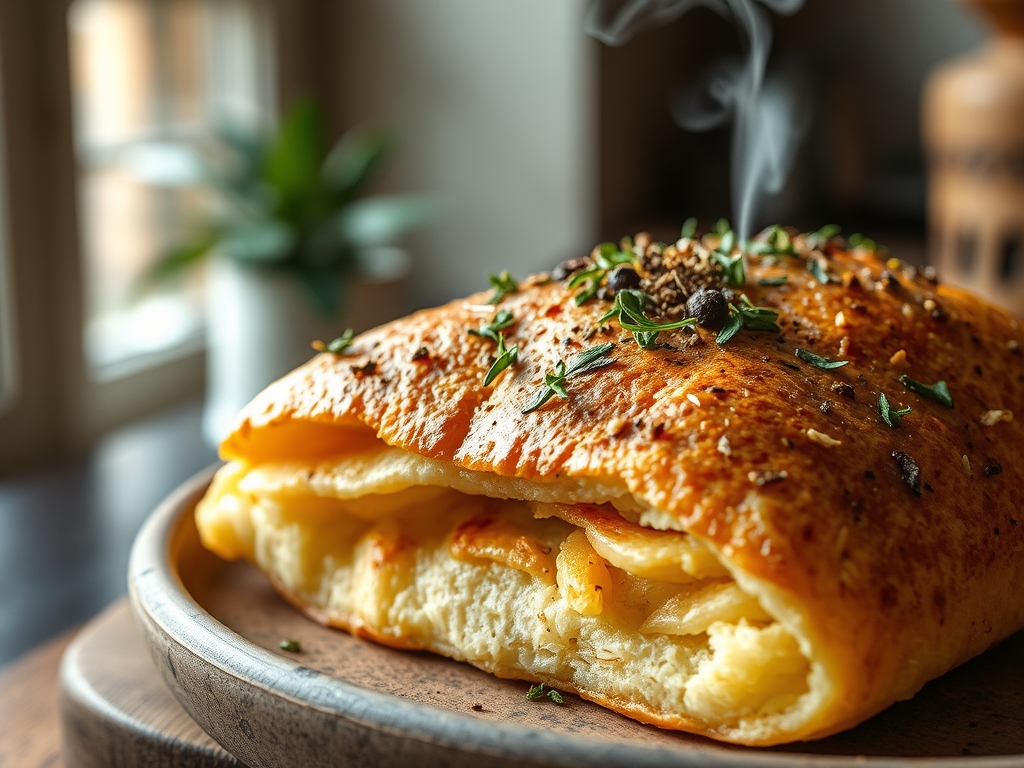
Look at the Masterclass photo above. Notice the deep, mahogany-colored crust and the "ear" where the score opened. If your bread is pale, you likely under-baked it or failed to trap enough steam. If the crust is thick and leathery rather than crisp, your oven temperature was too low. The interior crumb should be honeycombed with small, irregular holes. If the center is gummy or "grey," the loaf was cut while still hot. Ancient Egyptian Bread must cool completely to allow the starch molecules to retrograde and set. If you see a "flying crust" (a large gap between the top crust and the bread), you likely didn't degas the dough enough during the final shaping.
THE DEEP DIVE
Macro Nutrition Profile:
Per 100g serving, this bread offers approximately 240 calories, 9g of protein, 45g of complex carbohydrates, and 6g of dietary fiber. Emmer is significantly higher in magnesium and zinc than modern wheat, making it a functional food for metabolic health.
Dietary Swaps:
- Vegan: This recipe is naturally vegan if you swap the honey for agave or omit it entirely.
- Keto: Impossible. This is a grain-based infrastructure.
- Gluten-Free: While emmer is an ancient grain, it contains gluten. Those with Celiac disease must avoid this recipe. For a GF alternative, use a blend of sorghum and teff flour with psyllium husk as a binder.
Meal Prep & Reheating Science:
To maintain the molecular structure, store the bread in a paper bag at room temperature for up to three days. Do not refrigerate. To reheat, spray the crust with a fine mist of water and place in a 350-degree oven for 8 minutes. This re-hydrates the starch and restores the "crunch" through a secondary Maillard reaction.
THE KITCHEN TABLE
Why is my emmer bread so much denser than store-bought sourdough?
Emmer has a lower gluten-to-starch ratio than modern wheat. It will never produce a "fluffy" white crumb. Its beauty lies in its density and the rich, nutty flavor profile of the ancient grain.
Can I use a bread machine for this recipe?
Negative. The delicate gluten structure of emmer cannot withstand the aggressive mechanical mixing of a bread machine. This dough requires the gentle, manual touch of the stretch-and-fold method to develop properly.
What if I don't have a sourdough starter?
You can create one by mixing equal parts emmer flour and water and letting it sit for 5 days, feeding it daily. However, for the best results, source an established "mother" with a robust microbial profile.
How do I know when the bread is officially done?
Use a probe thermometer. The internal temperature of the loaf must reach 208 degrees Fahrenheit. At this temperature, the starches have fully gelatinized and the excess moisture has evaporated, ensuring a stable internal structure.