Precision is not a suggestion; it is a mandate when you are dealing with the architecture of a Hawaiian Poke Bowl. We are talking about a structural masterpiece of raw marine protein, stratified against the backdrop of seasoned starch and the sharp, piquant bite of sulfuric aromatics. This is not a casual assembly of leftovers. This is a technical audit of texture and temperature. Imagine the resistance of a perfectly cubed Ahi tuna as it yields to a high-carbon steel blade. The surface tension of the soy-sesame emulsion must be viscous enough to cling to the flesh without drowning the delicate oceanic notes. Every element must be calibrated. From the snap of the radish to the creamy, fatty lipid profile of a ripened avocado, we are building a sensory data set. The goal is a balanced equilibrium of salt, acid, and fat. If your rice is a gummy mess or your fish is weeping moisture, your infrastructure has failed. We are here to ensure structural integrity and flavor optimization through rigorous culinary discipline.
THE DATA MATRIX
| Metric | Specification |
|---|---|
| Prep Time | 25 mins |
| Execution Time | 10 mins |
| Yield | 4 Servings |
| Complexity | 4/10 |
| Estimated Cost per Serving | $12.50 |
THE GATHERS
Ingredient Protocol:
- 500g / 1.1 lbs Sushi-grade Ahi Tuna (Yellowfin or Bigeye)
- 300g / 1.5 cups Short-grain Japanese Rice
- 60ml / 0.25 cup Tamari or High-Quality Soy Sauce
- 15ml / 1 tbsp Toasted Sesame Oil
- 10ml / 2 tsp Rice Vinegar (Unseasoned)
- 5g / 1 tsp Red Pepper Flakes or Togarashi
- 2 Large Scallions (Finely biased)
- 150g / 1 cup Shelled Edamame
- 1 Large Avocado (Firm-ripe)
- 30g / 2 tbsp Pickled Ginger (Gari)
- 5g / 1 tsp Toasted Black and White Sesame Seeds
Section A: Ingredient Quality Audit:
The primary failure point in a Hawaiian Poke Bowl is the osmotic dehydration of the fish. If your tuna looks dull or gray, it has oxidized. To fix this, ensure you are sourcing "carbon monoxide treated" tuna if buying frozen, which maintains the bright red myoglobin. If the fish feels slimy, it is past its prime; discard it. For sub-par rice that feels crunchy, the hydration ratio was likely off. You can salvage undercooked rice by adding 30ml of water and microwaving it under a sealed lid for 90 seconds to re-steam the grains. If your avocado is under-ripe and hard, macerate it in a small amount of lime juice and salt for ten minutes to soften the pectin cell walls.
THE MASTERCLASS
1. Starch Hydration and Thermal Stabilization
Rinse the short-grain rice under cold water until the effluent runs clear. This removes excess surface starch to prevent clumping. Cook using a 1:1.1 ratio of water to rice. Once finished, transfer the rice to a wide wooden bowl using a bench scraper to "cut" the rice rather than mashing it.
Pro Tip: Use a fan to rapidly cool the rice while folding in the vinegar. This creates a glossy sheen on the exterior of each grain through rapid evaporation and starch setting.
2. Marine Protein Stratification
Pat the tuna dry with lint-free paper towels. Using a sharp Yanagiba or a high-quality chef knife, slice the fish into uniform 1.5cm cubes. Consistency is vital for a synchronized mouthfeel. Place the cubes in a chilled stainless steel mixing bowl.
Pro Tip: Keep your protein over a "bain-marie" of ice. Maintaining a temperature below 4 degrees Celsius (40 degrees Fahrenheit) preserves the molecular integrity of the fish fats and prevents the growth of histamine-producing bacteria.
3. The Emulsion Interface
In a small saucier, whisk together the soy sauce, sesame oil, and rice vinegar. We are looking for a temporary emulsion where the oil is suspended in the soy. Slowly drizzle this over the fish. Add the scallions and sesame seeds.
Pro Tip: Use a digital scale to measure your liquids. Volume measurements are notoriously inaccurate for high-viscosity liquids like sesame oil; weight-based ratios ensure the salt-to-fat balance is identical every time you execute.
4. Component Integration
Assemble the bowl by placing a base of tempered rice at the bottom. Arrange the edamame, avocado, and ginger in distinct quadrants. Place the marinated tuna in the center. The visual objective is a high-contrast color palette.
Pro Tip: Use a ring mold if you want a professional, tiered presentation. This compresses the rice just enough to support the weight of the toppings without compromising the aerated texture of the grains.
Section B: Prep & Timing Fault-Lines:
The most common timing error is marinating the fish too early. If the tuna sits in the acidic soy-vinegar mixture for more than 15 minutes, the acid will begin to "cook" the exterior, turning the texture mealy and opaque. This is a poke bowl, not a ceviche. Always dress the fish immediately before serving. Another fault-line is temperature crossover. Serving ice-cold fish on piping hot rice will cause the fish to "sweat" and release juices, ruining the emulsion. Ensure the rice has cooled to body temperature (approximately 37 degrees Celsius) before assembly.
THE VISUAL SPECTRUM
Section C: Thermal & Visual Troubleshooting:
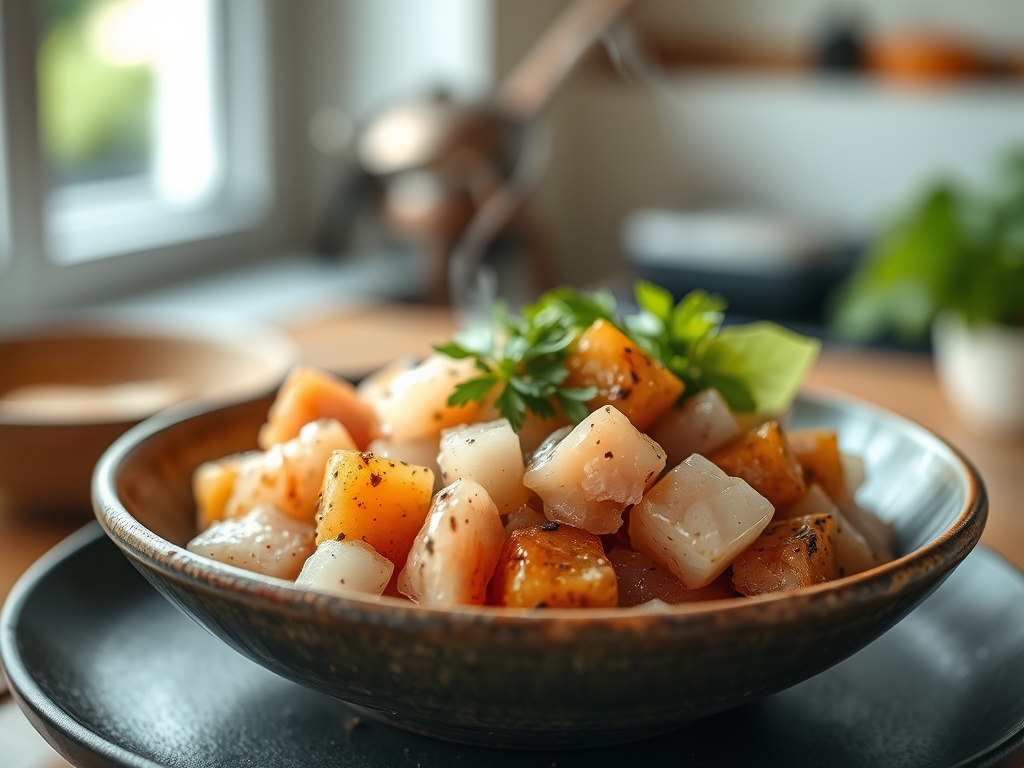
Referencing the Masterclass photo, observe the vibrant saturation of the tuna. If your dish looks "flat" or brown, your soy-to-fish ratio is likely too high, or you have used a dark soy sauce instead of light. If the edamame looks shriveled, it was likely over-boiled and then air-dried; always shock green vegetables in an ice bath to lock in the chlorophyll. If the sesame seeds appear buried, you are likely mixing them into the sauce rather than using them as a final "top-coat" garnish. To achieve that professional "glow," lightly mist the final bowl with a neutral oil spray to catch the light for photography or presentation.
THE DEEP DIVE
Macro Nutrition Profile:
A standard serving provides approximately 550 calories. It is a powerhouse of lean protein (35g), healthy monounsaturated fats from avocado (18g), and complex carbohydrates (60g). The high iodine content from optional seaweed and Omega-3 fatty acids from the tuna make this a neurologically dense meal.
Dietary Swaps:
- Vegan: Replace tuna with pressed, cubed tofu or roasted golden beets.
- Keto: Swap the rice for cauliflower rice or a bed of shredded cabbage.
- GF: Use certified Gluten-Free Tamari in place of standard soy sauce.
Meal Prep & Reheating Science:
Never reheat a Hawaiian Poke Bowl. The molecular structure of raw tuna is irreversibly altered at 45 degrees Celsius, turning it from a silky delicacy into a dry, gray mass. If meal prepping, store the components in a multi-compartment container. Keep the rice and fish separate until the moment of consumption to prevent the rice from absorbing the marinade and becoming waterlogged.
THE KITCHEN TABLE
Can I use frozen tuna for this?
Absolutely. In fact, "flash-frozen" fish is often safer for raw consumption as the sub-zero temperatures neutralize parasites. Just ensure you thaw it slowly in the refrigerator over 12 hours to maintain the cell structure.
What is the best rice for poke?
Short-grain Japanese rice (Sushiki) is the gold standard. It has a high amylopectin content, which provides the necessary stickiness to pick up with chopsticks while remaining individual grains rather than a mushy paste.
My sauce is too salty, how do I fix it?
Do not add water; it will break the emulsion. Instead, increase the lipid content with a touch more sesame oil or add a teaspoon of honey. The sugar and fat will counteract the perceived sodium on the palate.
How long does poke stay fresh?
Once the fish is cut and dressed, the clock is ticking. You have a maximum window of 4 hours for peak quality. Beyond that, the texture degrades significantly due to enzymatic breakdown and salt penetration.