Forget the romanticized postcard of a seaside terrace in Marseille; we are here to discuss the high-velocity extraction of marine collagen and the chemical suspension of saffron-tinted lipids. French Bouillabaisse is not merely a soup; it is a structural engineering project where the substrate is rockfish and the mortar is a garlic-heavy emulsion. If you are looking for a delicate, clear consomme, you have wandered into the wrong laboratory. We are aiming for a liquid that is thick, aggressive, and unapologetically viscous. The goal is to force the ocean into a pot and demand it yield every ounce of its savory essence through rapid boiling and mechanical agitation. This is a dish born from the necessity of the fisherman's haul, yet it demands the precision of a master technician. We are dealing with volatile aromatics, delicate proteins, and the constant threat of a broken emulsion. If you follow the protocol, you will produce a bowl of liquid gold that hums with the frequency of a Mediterranean summer. If you fail, you have made expensive fish water. Let us begin the audit.
THE DATA MATRIX
| Metric | Specification |
|---|---|
| Prep Time | 90 Minutes |
| Execution Time | 60 Minutes |
| Yield | 6 Standard Servings |
| Complexity | 8 / 10 |
| Estimated Cost per Serving | $18.00 – $25.00 |
THE GATHERS
Ingredient Protocol:
- 2.5 kg / 5.5 lbs Assorted Mediterranean or local rockfish (Red mullet, gurnard, monkfish, sea bass)
- 500g / 1.1 lbs Shellfish (Large prawns, mussels, or clams)
- 150ml / 0.6 cups Extra virgin olive oil
- 2 large / 2 cups Yellow onions, finely diced
- 2 large / 1.5 cups Leeks, white and light green parts only, sliced
- 4 large / 400g Plum tomatoes, crushed
- 6 cloves / 30g Garlic, smashed into a paste
- 1 strip / 5g Dried orange peel
- 1 tsp / 1g Saffron threads, toasted and crushed
- 1 bouquet / 15g Fennel fronds, parsley stalks, and thyme
- 2 liters / 8.5 cups Filtered water
- 50ml / 3 tbsp Pastis or Pernod (Anisette liqueur)
Section A: Ingredient Quality Audit:
The primary failure point in French Bouillabaisse is the use of oily, "blue" fish like mackerel or sardines. These contain high levels of polyunsaturated fats that turn acrid when subjected to the high-heat extraction required for this broth. If your fish smells "fishy" before it hits the pan, discard it. To fix a lack of depth in supermarket-grade white fish, supplement the base with 500g of crushed crab bodies or shrimp shells to increase the chitinous sweetness. If your saffron lacks potency, do not simply add more; instead, bloom the threads in 30ml of warm white wine for ten minutes to aerate the aromatic compounds before adding them to the saucier.
THE MASTERCLASS
Step 1: The Aromatic Foundation
Begin by heating your heavy-bottomed stockpot or large saucier over medium heat. Add the olive oil and sweat the onions, leeks, and fennel until translucent but not browned. We are looking to render the sugars without inducing the Maillard reaction yet. Add the garlic paste and cook for exactly sixty seconds to release the oils without scorching.
Pro Tip: Use a digital scale to ensure your aromatics are balanced; too much onion will over-sweeten the broth, masking the delicate saffron. The science here is "sweating," which uses low heat to break down cellular walls and release moisture without carbonizing the surface.
Step 2: The High-Heat Extraction
Increase the heat to high. Add the smaller, "soup fish" or fish carcasses. Use a sturdy wooden spoon or bench scraper to break the fish apart as they cook. Add the tomatoes, orange peel, saffron, and herbs. Pour in the water and the Pastis. Bring the mixture to a violent, rolling boil. This is counter-intuitive to traditional stock-making, but essential for Bouillabaisse.
Pro Tip: The rapid boiling serves to emulsify the olive oil into the water, creating the signature opaque, creamy texture. Without this mechanical agitation, the oil would simply float on top in unappealing slick bubbles.
Step 3: Mechanical Filtration
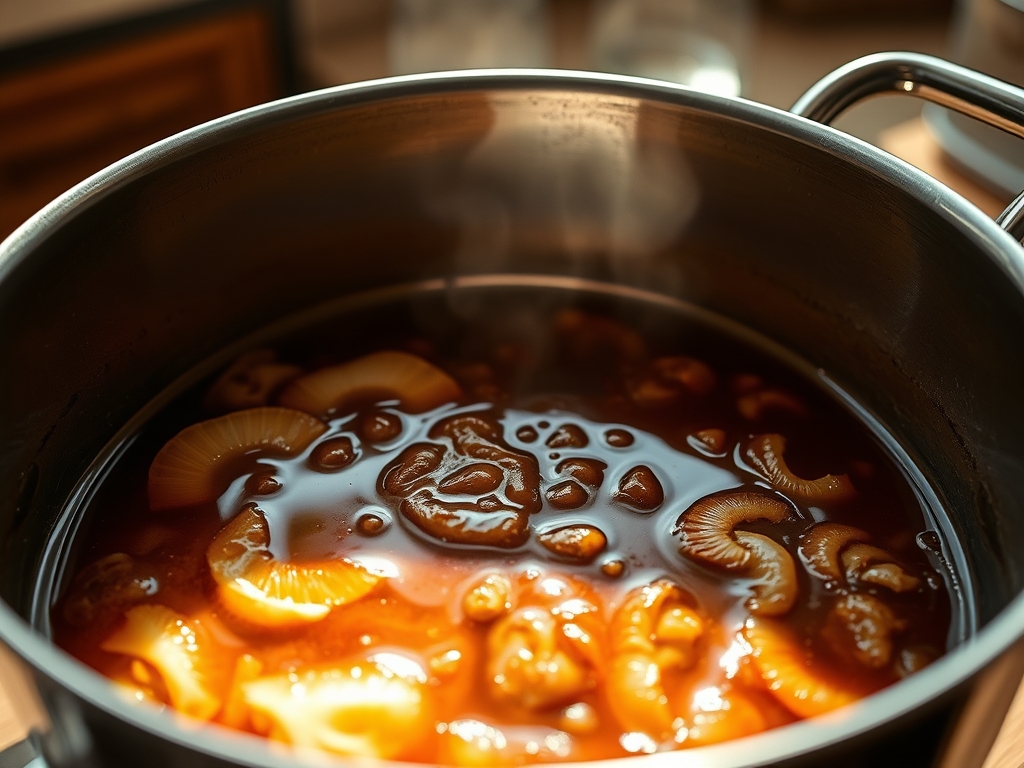
After 30 minutes of boiling, remove the pot from the heat. Pass the entire mixture through a chinois or a fine-mesh sieve into a clean pot. Use a ladle to press firmly on the solids, extracting every drop of liquid. The resulting broth should be thick, orange, and highly concentrated.
Pro Tip: Professional kitchens often use a food mill (moulin a legumes) for this step. This tool crushes the fish bones and heads, releasing the marrow and gelatin which provides the viscous mouthfeel characteristic of an authentic French Bouillabaisse.
Step 4: Poaching the Prime Fillets
Return the strained broth to a gentle simmer. Season with sea salt and cayenne pepper. Add the firm-fleshed fish fillets (monkfish or sea bass) first, followed by the prawns and mussels. Poach until the fish is just opaque and the mussels have opened their valves.
Pro Tip: Monitor the internal temperature with a digital probe thermometer. You are looking for an internal temperature of 52C (125F) for the fish fillets to ensure the protein strands do not tighten and become rubbery.
Section B: Prep & Timing Fault-Lines:
The most common human error is the "over-boil" during the final stage. While the initial broth requires a violent boil to infuse flavors and emulsify fats, the final poaching of the prime fillets must be gentle. If the heat is too high, the delicate fish will disintegrate into the broth, ruining the visual presentation. If your broth is too thin, it likely means the initial boil was not vigorous enough to achieve emulsification. Fix this by whisking in a small amount of rouille (garlic-saffron mayo) directly into the broth before serving to act as a secondary emulsifier.
THE VISUAL SPECTRUM
Section C: Thermal & Visual Troubleshooting:
Referencing the Masterclass photo, the broth must exhibit a deep, burnt-orange hue, a result of the saffron reacting with the tomato acidity and fish fats. If your broth appears pale or yellowish, your saffron is likely old or you have under-utilized the tomato paste/crushed tomatoes. Note the "sheen" on the surface in the image; this indicates a successful emulsion where the olive oil is suspended rather than separated. If you see large oil slicks, use a high-speed immersion blender for thirty seconds to force the lipids back into the aqueous solution. The fish fillets should remain distinct and intact, showing clean white flesh against the vibrant broth. If the color is dull, a final splash of fresh lemon juice will brighten the pH and the visual pop of the saffron.
THE DEEP DIVE
Macro Nutrition Profile:
A standard serving of French Bouillabaisse is a high-protein, moderate-fat powerhouse. Expect approximately 350-450 calories, 45g of protein, 18g of healthy monounsaturated fats, and 12g of carbohydrates (mostly from the aromatics and tomatoes).
Dietary Swaps:
- Vegan: Replace fish with a combination of king oyster mushrooms (for texture), seaweed (for iodine/ocean flavor), and roasted cauliflower. Use a vegetable dashi as the base.
- Keto: The dish is naturally keto-friendly. Ensure the rouille is made with avocado or olive oil mayo and skip the traditional bread croutons.
- GF: Naturally gluten-free, provided you serve with GF baguette or omit the bread entirely.
Meal Prep & Reheating Science:
Bouillabaisse does not tolerate the microwave well; the high-frequency waves will overcook the delicate seafood in seconds. To reheat, separate the solids from the liquid. Bring the liquid to a simmer on the stovetop, then turn off the heat and drop the seafood back in for 2 minutes to warm through via residual heat. This preserves the molecular structure of the fish proteins.
THE KITCHEN TABLE
Why is my broth thin instead of creamy?
You likely skipped the rolling boil. The high heat is required to mechanically emulsify the olive oil and fish gelatin. Use an immersion blender for sixty seconds to fix the texture and restore the viscous body.
Can I use frozen fish for this recipe?
Yes, but ensure it is thoroughly thawed and patted dry. Excess moisture from frozen fish can dilute the broth's intensity. Focus on firm-fleshed varieties to prevent the fish from turning into mush during the poaching phase.
What is the purpose of the orange peel?
The orange peel provides a high-note aromatic that cuts through the heavy lipids and savory fish notes. It acts as a chemical bridge between the piquant garlic and the earthy saffron, brightening the overall flavor profile.
What if I cannot find monkfish?
Any firm, white-fleshed fish will work as a substitute. Halibut, sea bass, or even cod (if handled gently) are excellent alternatives. The key is to avoid "flaky" fish that will disintegrate the moment they hit the hot liquid.