Listen to the sound of a structural revolution. It is the rhythmic thud of a bench scraper hitting a wooden board and the hiss of hot oil meeting a dense, fermented matrix. We are not just talking about food; we are discussing the pinnacle of ancient biotechnological engineering: Indonesian Tempeh. This is the holy grail of plant-based protein, where the humble soybean undergoes a total molecular redesign via the mycelium of Rhizopus oligosporus. When executed correctly, the result is a nutty, earthy, and incredibly versatile cake that puts processed meat alternatives to shame. We are looking for that perfect golden crust, a firm bite that resists the tooth, and a piquant aroma that signals successful fermentation. Forget the bland, rubbery blocks found in the back of the health food aisle. We are conducting a full-scale technical audit of this Indonesian staple to ensure your kitchen produces nothing less than structural perfection. Prepare to interface with the science of fungal binding and the chemistry of the Maillard reaction.
THE DATA MATRIX
| Metric | Specification |
|---|---|
| Prep Time | 45 Minutes (Active) |
| Execution Time | 36 – 48 Hours (Fermentation) |
| Yield | 1 kg / 2.2 lbs |
| Complexity | 7 / 10 |
| Estimated Cost per Serving | $0.85 USD |
THE GATHERS
Ingredient Protocol:
- 600g / 3 cups Whole Organic Soybeans (Dry)
- 30ml / 2 tbsp White Vinegar or Apple Cider Vinegar
- 5g / 1 tsp Rhizopus Oligosporus (Tempeh Starter)
- 2L / 8 cups Filtered Water (for soaking and boiling)
- 15ml / 1 tbsp Neutral Oil (for searing)
- 5g / 1 tsp Sea Salt
Section A: Ingredient Quality Audit:
The primary failure point in tempeh production is moisture management within the raw material. If your soybeans are old, they will resist hydration; this leads to a "woody" core that the mycelium cannot penetrate. To fix this, increase your soaking time by four hours. If your starter culture is inactive, the beans will simply rot. Always perform a "bloom test" by mixing a pinch of starter with warm sugar water; if it does not cloud or show activity within an hour, discard it. Finally, ensure your vinegar is at least 5% acidity. This drop in pH is the only thing standing between your protein cake and a hostile takeover by unwanted bacterial pathogens.
THE MASTERCLASS

Step-by-Step Execution:
1. The Hydration and De-hulling Phase
Place your dry soybeans in a large stainless steel bowl and cover with water. Soak for 12 to 24 hours. Once softened, rub the beans vigorously between your palms to loosen the hulls. The goal is to split the beans and remove the translucent skins.
Pro Tip: Use a large slotted spoon to skim the floating hulls off the surface. Removing the hulls is critical because they act as a physical barrier that prevents the fungus from accessing the starch and protein inside the bean.
2. The Acidification Boil
Transfer the split beans to a heavy-bottomed pot or a professional saucier. Cover with fresh water and add the vinegar. Bring to a boil, then simmer for 30 to 45 minutes until the beans are tender but still have a distinct "snap."
Pro Tip: Use a digital thermometer to ensure the water stays around 95 degrees Celsius. The vinegar lowers the pH to approximately 4.5, which inhibits the growth of Bacillus subtilis while creating the ideal environment for Rhizopus oligosporus to thrive.
3. The Critical Desiccation
Drain the beans and spread them onto a clean baking sheet. Use a clean kitchen towel or a hair dryer on a cool setting to remove every trace of surface moisture. The beans must feel dry to the touch but remain hydrated internally.
Pro Tip: This is the most common point of failure. If the beans are too wet, you will grow "stink tempeh" (over-fermented or bacterial). Use a bench scraper to turn the beans frequently, ensuring even evaporation across the entire batch.
4. Inoculation and Packing
Once the beans have cooled to 30 degrees Celsius (86 degrees Fahrenheit), sprinkle the starter culture over them. Mix thoroughly for at least two minutes using a sterile spatula. Pack the mixture into perforated plastic bags or traditional banana leaves, pressing down to remove air pockets.
Pro Tip: Precision is everything. Use a digital scale to measure your starter. If the beans are hotter than 35 degrees Celsius when you add the starter, you will kill the spores; if they are too cold, the fermentation will lag, allowing competitors to move in.
5. Controlled Incubation
Place the packages in a warm, draft-free environment (30-32 degrees Celsius) for 24 to 48 hours. You should see white, fuzzy mycelium begin to fill the gaps between the beans until the entire mass becomes a solid, white cake.
Pro Tip: Monitor the internal temperature of the cake. Fermentation is exothermic; it generates its own heat. If the internal temperature spikes above 38 degrees Celsius, you must provide airflow to cool it down, or the fungus will die in its own heat.
Section B: Prep & Timing Fault-Lines:
The most frequent human error is "The Great Rush." If you inoculate the beans while they are still steaming, you effectively sterilize your own batch. Conversely, if you wait too long and the beans drop to room temperature, the lag phase of the fungus extends, giving mold a window to colonize. Always use a calibrated probe thermometer. Another timing issue involves the "over-cook." If the beans are mushy before fermentation, the mycelium cannot breathe between the gaps, resulting in a slimy, unappealing texture rather than a firm cake.
THE VISUAL SPECTRUM
Section C: Thermal & Visual Troubleshooting:
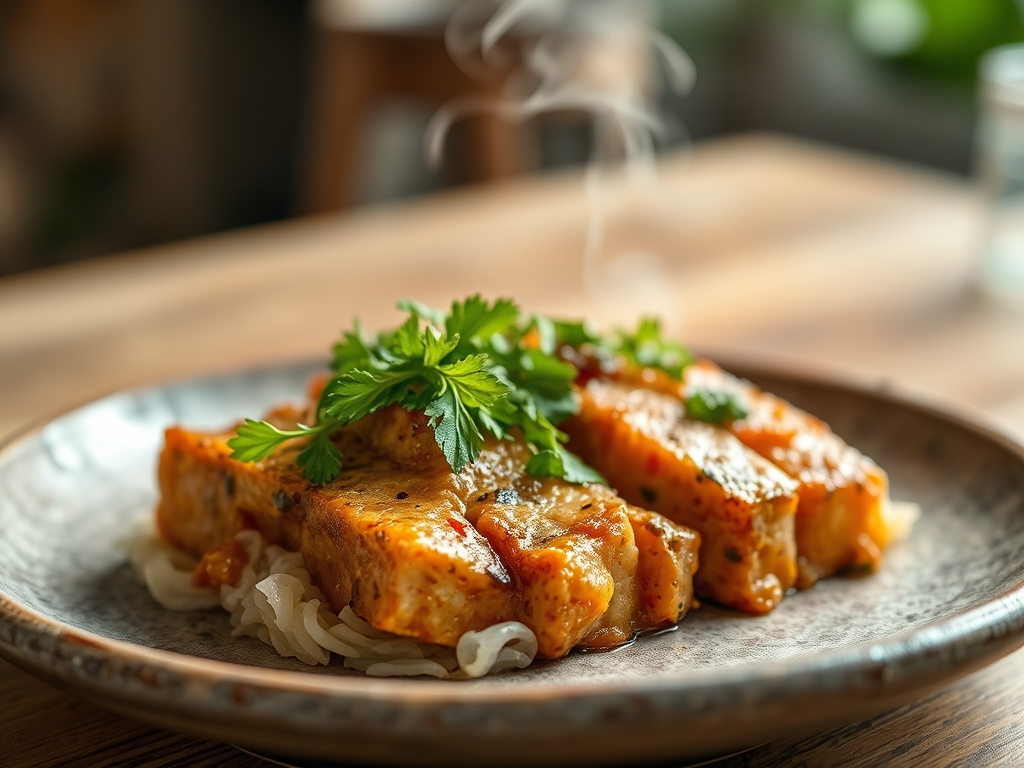
Referencing the Masterclass photo, your final product should exhibit a dense, uniform white coating. If you see black or grey spots, do not panic; these are usually just spores indicating the tempeh has matured. However, if you see yellow or green slime, the batch is compromised and must be discarded.
If your tempeh looks "patchy" with bare beans showing, your packing was too loose or your moisture levels were uneven. For the final cook, aim for a deep mahogany brown. If the tempeh browns too quickly and remains cold inside, your heat is too high; the sugars are caramelizing before the heat can infuse the core. If the color is dull and grey, you likely skipped the acidification step, or the beans were over-boiled, leading to a loss of structural integrity.
THE DEEP DIVE
Macro Nutrition Profile:
A standard 100g serving of Indonesian Tempeh provides approximately 190 calories, 19g of protein, 11g of fat, and 9g of carbohydrates. It is a complete protein source containing all nine essential amino acids.
Dietary Swaps:
- Vegan/GF: Naturally both. Ensure your starter is certified GF if you are highly sensitive.
- Keto: Tempeh is remarkably keto-friendly due to its high fiber content, which lowers the net carb count to roughly 4g per serving.
- Soy-Free: You can apply this exact protocol to chickpeas, black beans, or adzuki beans for a soy-free alternative.
Meal Prep & Reheating Science:
To maintain the molecular structure, always sear or bake tempeh before freezing. This sets the mycelium. When reheating, avoid the microwave as it can make the fungus "rubbery." Instead, use a pan to render any remaining fats and crisp the edges, or use a steamer to aerate the cake if you prefer a softer, more viscous mouthfeel in sauces.
THE KITCHEN TABLE
Why does my tempeh smell like ammonia?
This indicates over-fermentation. The fungus has begun to break down the proteins into amino acids and ammonia. It is still edible if the smell is faint, but if it is pungent and the cake is slimy, discard it immediately.
Can I make tempeh without a dedicated incubator?
Yes. An oven with the pilot light on or a top-of-the-fridge setup can work. The key is maintaining a consistent 30-32 degrees Celsius. Use a secondary thermometer to audit your "warm spot" before committing your beans.
Why is my tempeh crumbly instead of a solid cake?
This is a binding failure. Either the beans were too dry for the mycelium to grow, or you did not pack them tightly enough. The fungus needs a "bridge" to climb from one bean to the next.
Do I really need to remove the soybean skins?
Unless you are using pre-hulled beans, yes. The skins are indigestible to the fungus. If left on, the mycelium will only grow on the surface, and the center of your cake will remain a loose pile of beans.