Imagine the cacophony of a high-volume brasserie at 8:00 PM; the rhythmic clatter of shells against heavy-gauge stainless steel and the hiss of cold aromatics hitting a shimmering pool of butter. This is the theater of Belgian Moules Frites. It is a dish that demands more than mere cooking; it requires an architectural understanding of steam pressure and emulsion stability. When you lift that lid, you are not just releasing a cloud of garlic-infused vapor; you are witnessing the precise moment where bivalve proteins denature and release their saline liquor into a sharp, acidic wine base. The result is a broth so viscous and piquant that it transcends the status of a mere poaching liquid. To master this Belgian icon is to master the art of the three-minute flash-cook. We are looking for a perfect equilibrium between the oceanic brine of the mussel and the earthy, golden crunch of a twice-fried potato. This is culinary infrastructure at its most volatile and rewarding.
THE DATA MATRIX
| Metric | Specification |
|---|---|
| Prep Time | 25 mins |
| Execution Time | 8 mins |
| Yield | 2 Servings |
| Complexity (1-10) | 4 |
| Estimated Cost per Serving | $12.50 USD |
THE GATHERS
Ingredient Protocol:
- Fresh Live Mussels: 1 kg / 2.2 lbs (Bearded and scrubbed)
- Unsalted European Butter: 45g / 3 tbsp
- Shallots: 60g / 2 medium (Finely minced)
- Garlic Cloves: 15g / 3 cloves (Microplaned)
- Dry White Wine (Muscadet or Sauvignon Blanc): 175ml / 3/4 cup
- Heavy Cream (36% fat): 60ml / 1/4 cup
- Fresh Italian Parsley: 15g / 1/2 cup (Roughly chopped)
- Lemon: 1 unit (Zested and juiced)
- Russet Potatoes: 500g / 1.1 lbs (Peeled and cut into 1cm batons)
- Neutral Oil: 2L / 8 cups (For frying)
Section A: Ingredient Quality Audit:
The primary failure point in Belgian Moules Frites is the "dead shell" variable. If a mussel is open before cooking and refuses to close when tapped, the cellular integrity is compromised; discard it immediately to avoid contaminating the batch with ammonia. If your shallots lack that sharp, pungent "snap," they have likely oxidized. To fix this, soak minced shallots in ice water for five minutes to aerate the sulfur compounds and restore their crisp profile. Finally, if your wine is too "oaky," it will clash with the brine. Always opt for high-acid, stainless-steel-aged whites to ensure the acidity cuts through the butter fat.
THE MASTERCLASS
1. The Starch Foundation: The First Fry
Before the mussels even see the heat, your potatoes must undergo their first thermal transformation. Heat your oil in a deep fryer or heavy pot to 160C (320F). Fry the potato batons until they are pale but tender. Use a digital scale to ensure uniform portioning and a spider skimmer to remove them.
Pro Tip: This stage is about par-cooking the interior starch without browning. The low temperature allows the moisture to evaporate slowly, creating a porous surface that will later become ultra-crisp during the second fry.
2. The Saucier Infrastructure: Aromatics
Place a large saucier or Dutch oven over medium heat. Add the butter and wait for the milk solids to foam but not brown. Add the shallots and garlic. Use a bench scraper to efficiently move your aromatics from the cutting board to the pan without losing the essential juices.
Pro Tip: We are looking to sweat the aromatics, not sauté them. The goal is to render the shallots translucent so they release their sugars into the butter, creating a flavor base that is sweet rather than toasted.
3. The Deglaze and Infusion
Increase the heat to high. Once the pan is screaming hot, pour in the white wine. Use a whisk to deglaze the bottom of the pan, scraping up any concentrated shallot sugars. Let the liquid reduce by exactly one-third to concentrate the acidity.
Pro Tip: Reducing the wine is vital for "burning off" the harsh ethanol notes. This ensures the final broth tastes of grapes and minerals rather than raw alcohol.
4. The Steam Pressure Phase
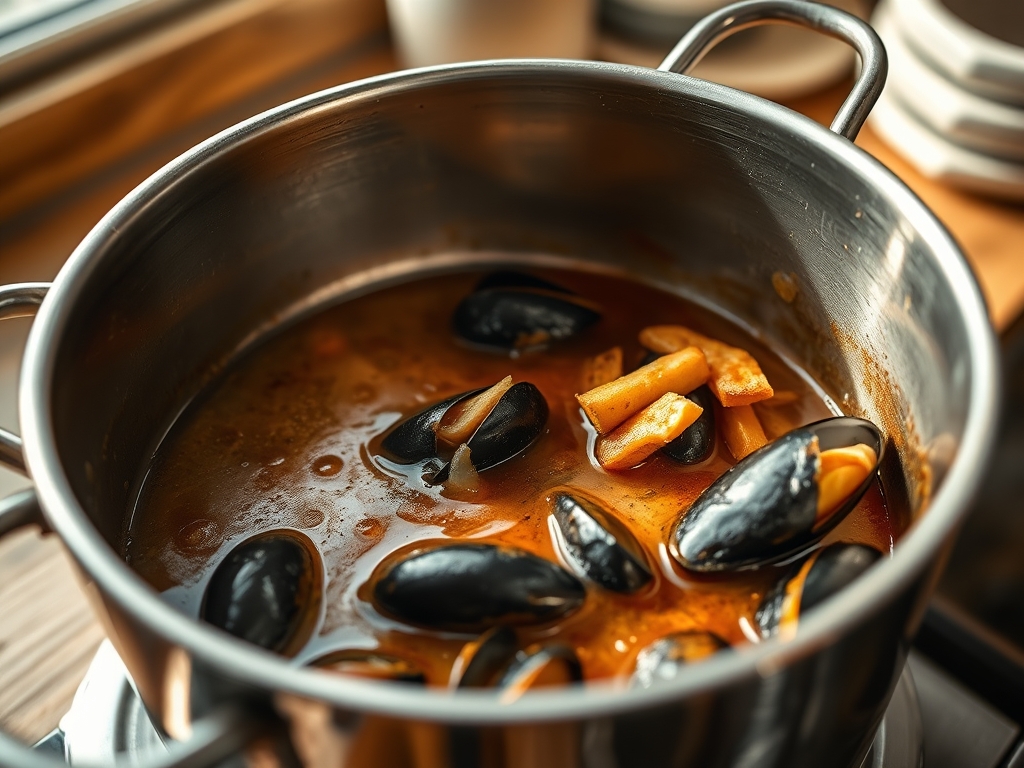
Add the mussels to the pan in one quick motion and immediately clamp the lid down tight. The trapped steam is what will force the bivalves to open. Shake the pan vigorously every 30 seconds to redistribute the heat.
Pro Tip: This is a game of thermodynamics. The high heat creates a high-pressure environment that cooks the mussel meat in its own juices. Overcooking by even sixty seconds will cause the proteins to tighten and become rubbery.
5. The Emulsion Finish
As soon as the shells yawn open, remove the lid. Pour in the heavy cream and add the parsley. Toss the mussels one last time to infuse the cream with the mussel liquor, creating a viscous and silky sauce that clings to the shells.
Pro Tip: The cream acts as a stabilizer. It binds the acidic wine and the salty mussel juice into a cohesive emulsion. Use a digital thermometer to ensure the broth stays below the boiling point once the cream is added to prevent curdling.
6. The Final Crunch: The Second Fry
While the mussels rest for sixty seconds, crank your fry oil to 190C (375F). Drop the par-cooked fries back in for two minutes until they reach a deep, golden hue. Season immediately with fine sea salt.
Pro Tip: The second fry triggers the Maillard reaction on the exterior of the potato. This creates the structural integrity needed to withstand being dipped into the mussel broth.
Section B: Prep & Timing Fault-Lines:
The most common "timing fault-line" occurs when the fries finish ten minutes after the mussels. Mussels lose their thermal mass rapidly. To fix this, always keep your par-cooked fries on a wire rack at room temperature. Only start the final fry the moment the wine hits the saucier. If your broth looks "broken" or oily, you likely added the cream to a boiling liquid. To rescue a broken sauce, whisk in a tablespoon of cold butter off the heat to re-emulsify the fats.
THE VISUAL SPECTRUM
Section C: Thermal & Visual Troubleshooting:
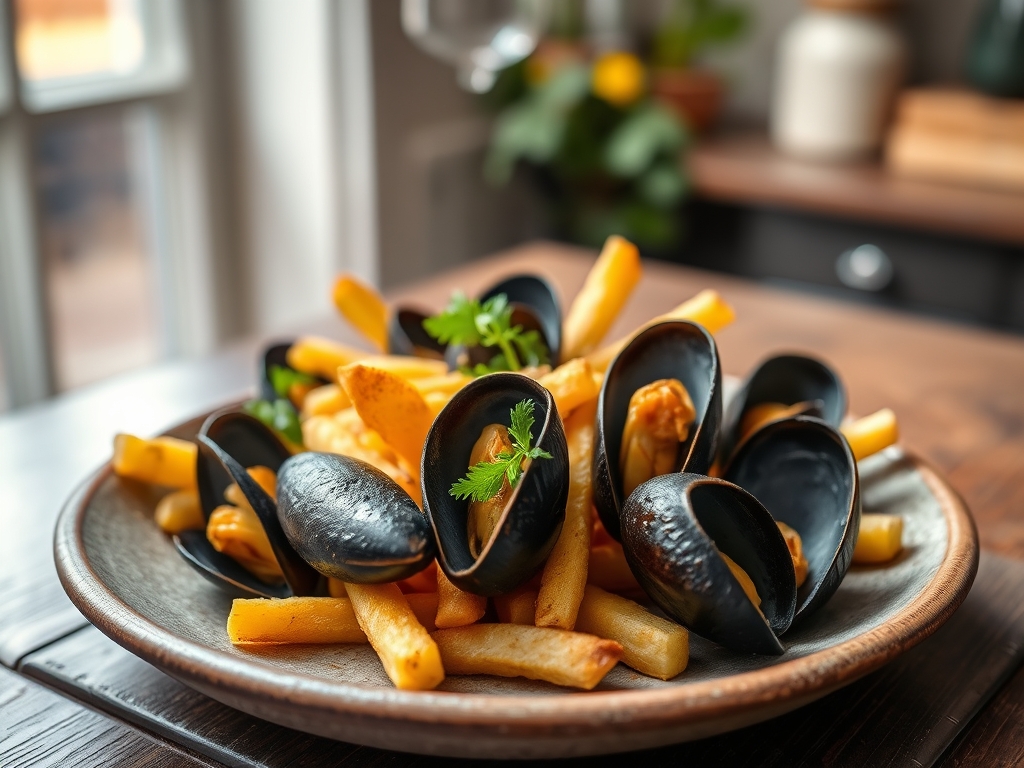
Look at the Masterclass photo above. Notice the "liquor line" on the mussels; they should look plump and moist, not shriveled. If your mussels look tiny and dry, you have exceeded the thermal threshold. The broth should be an opaque, creamy ivory color, not a clear yellow. If it is too clear, you lacked enough agitation during the cream stage. The parsley must be vibrant green; if it looks dull or brown, it was added too early and the chlorophyll has oxidized. Finally, the fries should show a distinct "shatter" texture on the edges, indicating a successful two-stage fry.
THE DEEP DIVE
Macro Nutrition Profile:
A standard serving of Belgian Moules Frites provides approximately 850 calories. You are looking at 45g of high-quality protein, 42g of fats (primarily from the butter and cream), and 65g of carbohydrates from the potatoes. Mussels are an incredible source of Vitamin B12 and Manganese.
Dietary Swaps:
- Vegan: Replace mussels with king oyster mushroom "scallops," use vegan butter, and swap heavy cream for full-fat coconut milk.
- Keto: Eliminate the fries entirely and double the mussels. Use a side of roasted cauliflower seasoned with truffle oil.
- GF: This dish is naturally gluten-free, provided your fries are not dusted in flour (a common restaurant trick).
Meal Prep & Reheating Science:
Mussels are notoriously difficult to reheat because the proteins "shrink" when hit with secondary heat. If you must reheat, remove the meat from the shells and warm them gently in the leftover broth over a low simmer. Never microwave them, as this will turn the delicate bivalves into pencil erasers.
THE KITCHEN TABLE
How do I know if a mussel is bad?
If it stays closed after eight minutes of steaming, the adductor muscle failed to release, often indicating the mussel was dead before cooking. Discard it. If it smells like "swamp" instead of "ocean," discard the whole batch.
Can I use frozen mussels?
You can, but the texture will suffer. Frozen mussels are usually pre-cooked, meaning they will lack the "liquor release" that creates the base of your sauce. If using frozen, add a splash of bottled clam juice to compensate.
What is the best wine for this?
Stick to high-acid, un-oaked whites. A French Muscadet is the gold standard because its saline qualities mirror the mussels. Avoid buttery Chardonnays, as they make the dish feel heavy and muddy the flavors.
Why are my fries soggy?
You likely overcrowded the fryer, causing the oil temperature to drop. Fry in small batches to maintain that 190C threshold. Also, never salt your fries until the very second they come out of the oil.