
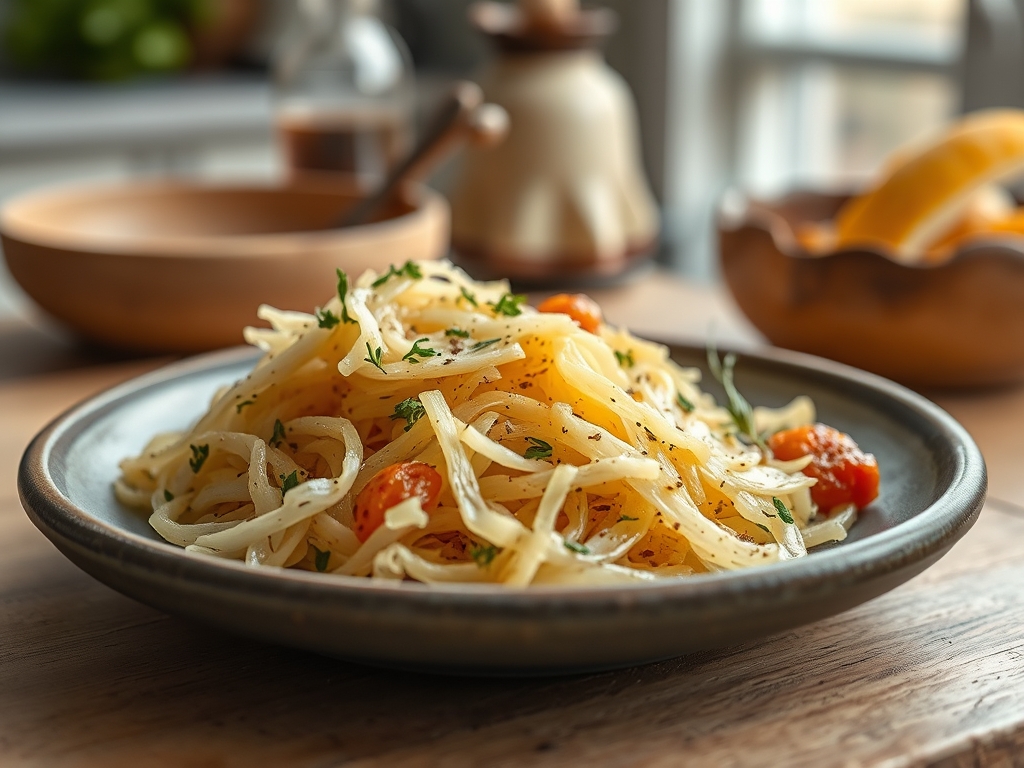
Listen closely because we are about to dismantle the humble brassica and rebuild it into a probiotic powerhouse. Forget the flaccid, tinned remnants of a backyard barbecue. We are discussing German Sauerkraut in its most primal and scientifically rigorous form. This is not just a side dish; it is a masterclass in cellular degradation and microbial warfare. When you slice through a head of cabbage, you are breaking open the vacuole of the plant cells, releasing the very sugars that Lactobacillus bacteria crave. As the salt draws out the moisture through osmotic pressure, you create a brine that acts as a selective barrier. It kills off the spoilage organisms while allowing the salt-tolerant lactic acid bacteria to thrive. The result is a crunch that defies logic and a piquant acidity that cuts through the heaviest of fats. We are engineering a transformation from raw cellulose to a complex, tangy masterpiece. If your kitchen does not smell like a laboratory of delicious fermentation by the end of this, you have failed the audit.
THE DATA MATRIX
| Metric | Specification |
|---|---|
| Prep Time | 45 Minutes |
| Execution Time | 14 to 21 Days (Fermentation) |
| Yield | 2 Liters / 2.1 Quarts |
| Complexity (1-10) | 4 |
| Estimated Cost per Serving | $0.22 |
THE GATHERS
Ingredient Protocol:
- 2 kg / 4.4 lbs Green Cabbage (Weight after removing outer leaves and core)
- 40 g / 1.4 oz Fine Sea Salt (Strictly non-iodized)
- 10 g / 2 tsp Caraway Seeds (To infuse the brine with earthy notes)
- 5 g / 1 tsp Juniper Berries (Optional; for a traditional forest profile)
- 250 ml / 1 cup Filtered Water (Only if the cabbage is low in moisture)
Section A: Ingredient Quality Audit:
The most common failure point in German Sauerkraut is the raw material. If your cabbage feels light or "squishy," its water content is insufficient. This results in a lack of natural brine, forcing you to add water and diluting the flavor. Technical Fix: If the cabbage is older, use a digital scale to increase the salt ratio to 2.5 percent of the total weight to force more moisture out of the stubborn cell walls. Secondly, never use table salt. The iodine in standard table salt acts as an antimicrobial agent that can stall your fermentation entirely. Always opt for pure sea salt or kosher salt to ensure the microbial colony remains healthy and productive.
THE MASTERCLASS
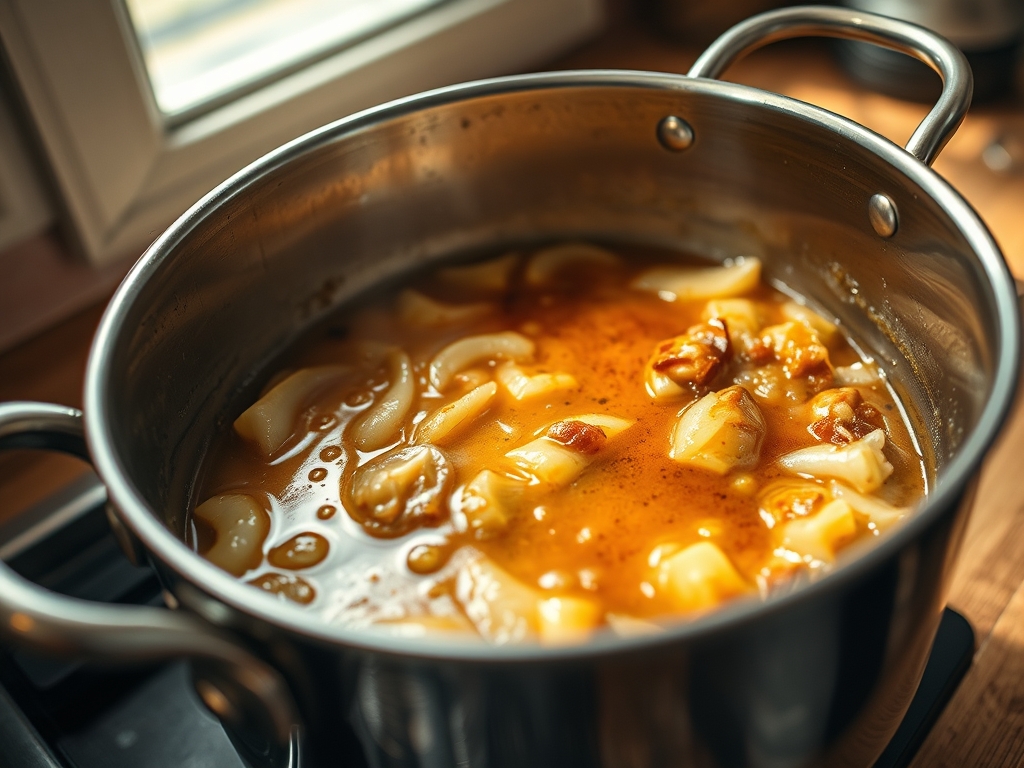
Step 1: The Precision Shred
Remove the tattered outer leaves of your cabbage but do not discard them; they are essential tools for later. Using a sharp chef knife or a professional mandoline, shave the cabbage into consistent 2mm ribbons. Consistency is king here. If your shreds vary in thickness, they will soften at different rates, leading to a structural failure in the final mouthfeel.
Pro Tip: Use a bench scraper to efficiently transfer your mounds of cabbage into a large stainless steel mixing bowl. The science here is surface area; the thinner the shred, the more surface area is exposed to the salt, accelerating the osmotic draw.
Step 2: Mechanical Maceration
Sprinkle the salt over the cabbage. Now, you must get aggressive. Massage and squeeze the cabbage with clean hands for at least 10 minutes. You are physically rupturing the cell walls to release the cellular fluid. You will know you are successful when the cabbage turns from opaque to translucent and a pool of viscous liquid forms at the bottom of the bowl.
Pro Tip: If your hands tire, use a heavy wooden tamper or a professional meat tenderizer to pound the cabbage. This mechanical stress mimics the maceration process, ensuring that the brine is entirely composed of the plant's own nutrient-rich juices.
Step 3: The Anaerobic Pack
Pack the cabbage into a glass fermentation crock or wide-mouth jars. Use your fist or a tamper to press down with significant force. There must be zero air pockets. Air is the enemy; it allows mold to grow. Pour any remaining liquid from the bowl over the top. The cabbage must be completely submerged under the brine.
Pro Tip: Use a digital scale to weigh down the cabbage. Place one of those reserved outer leaves over the shredded cabbage, then place a glass fermentation weight on top. This creates a physical seal that keeps the solids in an anaerobic environment.
Step 4: The Fermentation Vigil
Place the jars in a cool, dark spot (18 to 22 degrees Celsius). Check the jars daily. During the first few days, you will see bubbles; this is carbon dioxide, a byproduct of the bacteria feast. If the brine level drops, press the weight down to aerate the surface slightly and release trapped gases.
Pro Tip: Use a pH strip to monitor the acidity. You are looking for a drop below 4.6 pH to ensure safety. A saucier is not needed here, but a clean spoon is essential for tasting the progression of the lactic acid development.
Section B: Prep & Timing Fault-Lines:
Temperature is the primary variable that ruins timing. If your kitchen is too warm (above 25 degrees Celsius), the fermentation happens too fast, leading to "mushy" sauerkraut. The enzymes break down the pectin before the acid can preserve it. Technical Fix: If you notice the brine bubbling violently or the cabbage softening too quickly, move the jars to a cooler location like a basement or a wine fridge to slow the metabolic rate of the bacteria.
THE VISUAL SPECTRUM
Section C: Thermal & Visual Troubleshooting:
Look at the Masterclass photo. Notice the vibrant, pale gold hue and the slight translucence of the strands. If your sauerkraut looks grey or brown, you have experienced oxidation. This happens when the cabbage is not fully submerged. Technical Fix: If the top layer is discolored, remove and discard it immediately. The cabbage below should still be vibrant. If the brine looks "ropey" or slimy, this is usually due to Leuconostoc bacteria taking over because the temperature was too low. Increase the ambient temperature slightly to encourage the more robust Lactobacillus strains to dominate.
THE DEEP DIVE
Macro Nutrition Profile:
Sauerkraut is a low-calorie, high-fiber powerhouse. A standard 100g serving contains approximately 19 calories, 0g fat, 4g carbohydrates, and 2g protein. Its real value lies in the billions of CFUs (Colony Forming Units) of probiotics.
Dietary Swaps:
- Vegan/Keto/GF: Naturally fits all these profiles.
- Flavor Variation: Add shredded apples or beets for a sweeter, more colorful profile. The extra sugar in the beets will accelerate the fermentation.
Meal Prep & Reheating Science:
To maintain the molecular structure and probiotic benefits, never boil your sauerkraut. If you must heat it, do so gently. High heat will render the probiotics dead and turn the crisp cellulose into a soggy mess. For meal prep, store in glass jars in the refrigerator for up to six months; the cold temperature puts the bacteria into a dormant state.
THE KITCHEN TABLE
Why is my brine cloudy?
Cloudy brine is a sign of a healthy fermentation. It indicates that the lactic acid bacteria are active and multiplying. As long as there is no fuzzy mold or putrid smell, the cloudiness is a visual badge of success.
Can I use purple cabbage?
Absolutely. Red or purple cabbage contains anthocyanins which will turn the entire jar a vibrant magenta. The process remains identical, though red cabbage typically has a slightly tougher cellular structure and may require a longer fermentation time.
How do I know if it is spoiled?
Trust your nose. Fermented cabbage should smell sour and salty, like a clean pickle. If you detect notes of yeast, alcohol, or rotting sulfur, the batch has been compromised by wild yeasts or bad bacteria. When in doubt, toss it.
Why is my sauerkraut too salty?
If the salt flavor is overwhelming, you likely miscalculated the ratio. You can rinse the sauerkraut under cold water before serving to remove excess salt, though this also removes some of the beneficial brine and probiotics.
Do I need to add vinegar?
Never. Real German Sauerkraut creates its own acidity through fermentation. Adding vinegar is a shortcut used by commercial producers to mimic the flavor without the time. It kills the live cultures and ruins the complex flavor profile.