Listen to the sound of a pressurized glass bottle screaming for release. That hiss is not just carbon dioxide escaping; it is the sound of a microscopic civilization thriving within a golden, murky nectar. We are talking about Mexican Tepache, the undisputed heavyweight champion of the fermented street-cart world. This is not your grandmother's lemonade. This is a wild, piquant, and effervescent miracle born from the discarded armor of a pineapple. It is a masterclass in waste management and microbial engineering. When you combine the fibrous rinds of a ripe fruit with the unrefined depth of piloncillo and a handful of aromatic spices, you are not just making a drink. You are conducting a biological symphony. The air in your kitchen will transform, thickening with the scent of tropical esters and funky, lactic acidity. This beverage represents the perfect intersection of ancient tradition and modern culinary chemistry. It is refreshing, slightly funky, and carries a kick that reminds you exactly why wild fermentation is the ultimate kitchen flex.
THE DATA MATRIX
| Metric | Specification |
|---|---|
| Prep Time | 20 Minutes |
| Execution Time | 72 to 96 Hours |
| Yield | 2 Liters |
| Complexity (1-10) | 3 |
| Estimated Cost per Serving | $0.45 |
THE GATHERS
Ingredient Protocol:
- 1 Large Ripe Pineapple (Approximately 1.5kg / 3.3 lbs)
- 400g / 2 cups Piloncillo or Dark Brown Sugar
- 2 Liters / 8.5 cups Filtered Water
- 1 Cinnamon Stick (Mexican Canela preferred)
- 3 Whole Cloves
- 1 Star Anise (Optional for depth)
- 5g / 1 tsp Red Chili Flakes (Optional for heat)
Section A: Ingredient Quality Audit:
The success of your Mexican Tepache hinges entirely on the surface area of your fruit. If your pineapple is over-sanitized or commercially waxed, you have effectively neutralized your primary labor force: the wild yeast. If you suspect your fruit has been treated with pesticides or heavy waxes, scrub it vigorously with a vegetable brush under cool water, but do not use soap. If the pineapple is under-ripe, the sugar content will be too low to sustain a vigorous ferment. To fix this, increase your piloncillo ratio by 15 percent to provide the necessary fuel for the yeast to infuse the liquid with carbonation. If your water is heavily chlorinated, it will kill the microbes. Always use filtered water or boil tap water and let it sit for 24 hours to aerate and dechlorinate before starting your brew.
THE MASTERCLASS
Step-by-Step Execution:
1. The Anatomical Breakdown
Remove the crown and the base of the pineapple using a sharp chef's knife. Slice the skin away in thick strips, ensuring a generous amount of flesh remains attached to the rind. Cut the core into chunks but reserve the sweet fruit for another application.
Pro Tip: Use a digital scale to ensure your sugar-to-water ratio is precise. Consistency in specific gravity is the difference between a refreshing tonic and a syrupy mess.
2. The Piloncillo Dissolution
In a large saucier or pot, combine 500ml of the water with the piloncillo and spices. Heat gently over medium-low until the sugar is fully dissolved. Do not let it reach a hard boil; you only want to render the solids into a uniform syrup.
Pro Tip: Using a bench scraper to shave the piloncillo cone before heating will accelerate the dissolution process and prevent scorching the delicate molasses notes.
3. The Vessel Integration
Place the pineapple skins and core into a clean 3-liter glass jar. Pour the warm syrup over the fruit, then top with the remaining 1.5 liters of filtered water. Ensure there is at least two inches of headspace at the top of the jar to allow for foam and gas expansion.
Pro Tip: Use a pH meter if you have one. You are looking for an initial acidity that will drop as the wild yeast and lactobacillus begin their work.
4. The Primary Fermentation
Cover the jar with a breathable cloth or a loose-fitting lid. Store in a dark, warm place (between 70F and 80F) for 24 to 48 hours. You will begin to see a white foam forming on the surface; this is a sign of a healthy, active culture.
Pro Tip: If you see white "Kahm yeast" on the surface, simply skim it off with a sterile spoon. It is harmless but can affect the flavor profile if left to proliferate.
5. The Clarification and Bottling
Strain the liquid through a fine-mesh sieve into a clean pitcher. Discard the solids. At this point, the Tepache is ready to drink over ice, or you can move to a secondary fermentation in flip-top bottles for an additional 24 hours to increase the "fizz" factor.
Pro Tip: Use a refractometer to check the residual sugar. If it is too sweet, let it ferment another day. If it is too dry, add a teaspoon of sugar per bottle before sealing.
Section B: Prep & Timing Fault-Lines:
Temperature is the most volatile variable in this equation. If your kitchen is a meat locker (below 65F), the yeast will go dormant, resulting in a flat, sugary water. Move the jar to the top of the refrigerator where the ambient heat from the compressor can keep it active. Conversely, if your environment is a tropical swamp (above 85F), the fermentation will move too fast, potentially producing off-flavors that taste like vinegar or over-ripe trash. Check your brew every 12 hours. If it smells like a brewery, it is moving well. If it smells like a nail salon, discard it and start over with better temperature control.
THE VISUAL SPECTRUM
Section C: Thermal & Visual Troubleshooting:
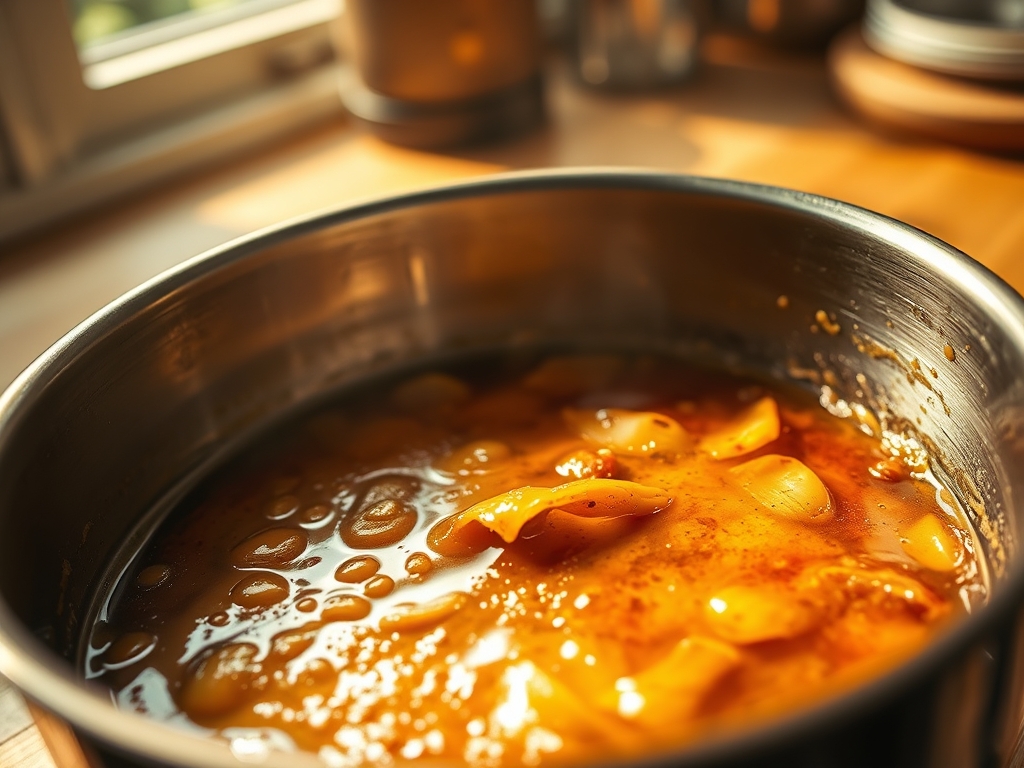
Referencing the Masterclass photo, your final product should exhibit a vibrant, golden-amber hue with a slight viscous quality. If your liquid looks grey or dull, your spices may have oxidized or your pineapple was bruised. A healthy Tepache should have a crown of white, frothy bubbles. If the liquid is crystal clear, the fermentation hasn't started; you likely used water that was too hot and killed the yeast. If the liquid is excessively cloudy or "ropey" in texture, you may have a pediococcus infection. While not dangerous, it creates an unpleasant mouthfeel. To fix a "ropey" batch, ensure all your equipment is sanitized with a food-grade sanitizer before the next attempt. The visual cue for "done" is when the pineapple skins begin to look slightly translucent and have sunk to the bottom of the vessel.
THE DEEP DIVE
Macro Nutrition Profile:
A standard 250ml serving of Mexican Tepache contains approximately 80 to 120 calories, depending on the residual sugar. It is virtually fat-free and contains trace amounts of Vitamin C and bromelain, an enzyme that aids digestion. Because it is a wild ferment, it is rich in probiotics that support gut health.
Dietary Swaps:
- Vegan: Piloncillo is naturally vegan, but ensure your sugar source is not processed with bone char.
- Keto: This is difficult due to the sugar required for fermentation. However, you can ferment it longer to "dry it out" and use a Monkfruit-based simple syrup for serving.
- GF: Naturally gluten-free.
Meal Prep & Reheating Science:
Never reheat Tepache; heat will kill the probiotic cultures and destroy the delicate esters. To maintain molecular structure, store the finished, strained liquid in the coldest part of your refrigerator. Cold temperatures slow the yeast to a crawl, preserving the carbonation and preventing the drink from turning into pineapple vinegar. It will stay peak-fresh for 5 to 7 days.
THE KITCHEN TABLE
Can I use canned pineapple for Tepache?
Absolutely not. Canned pineapple is pasteurized, meaning all the wild yeast required for fermentation has been heat-killed. You will end up with a jar of sugar water and sadness. Stick to fresh, organic rinds for the best microbial results.
Why does my Tepache taste like vinegar?
You let it ferment too long or exposed it to too much oxygen. Acetobacter thrives on oxygen and converts alcohol into acetic acid. Keep your jar covered but not airtight during the first stage to prevent this conversion.
Is Tepache alcoholic?
Minimally. Due to the short fermentation time, most Tepache clocks in between 0.5 percent and 2.0 percent ABV. It is a social beverage, not a spirit. If you want more punch, you can "fortify" it with a splash of dark rum.
What are the white spots on my pineapple skins?
If they are fuzzy, it is mold; discard the batch immediately. If they are flat, white, and look like dusty film, it is likely Kahm yeast. Skim it off, smell the liquid, and if it smells sweet/tart, proceed with caution.