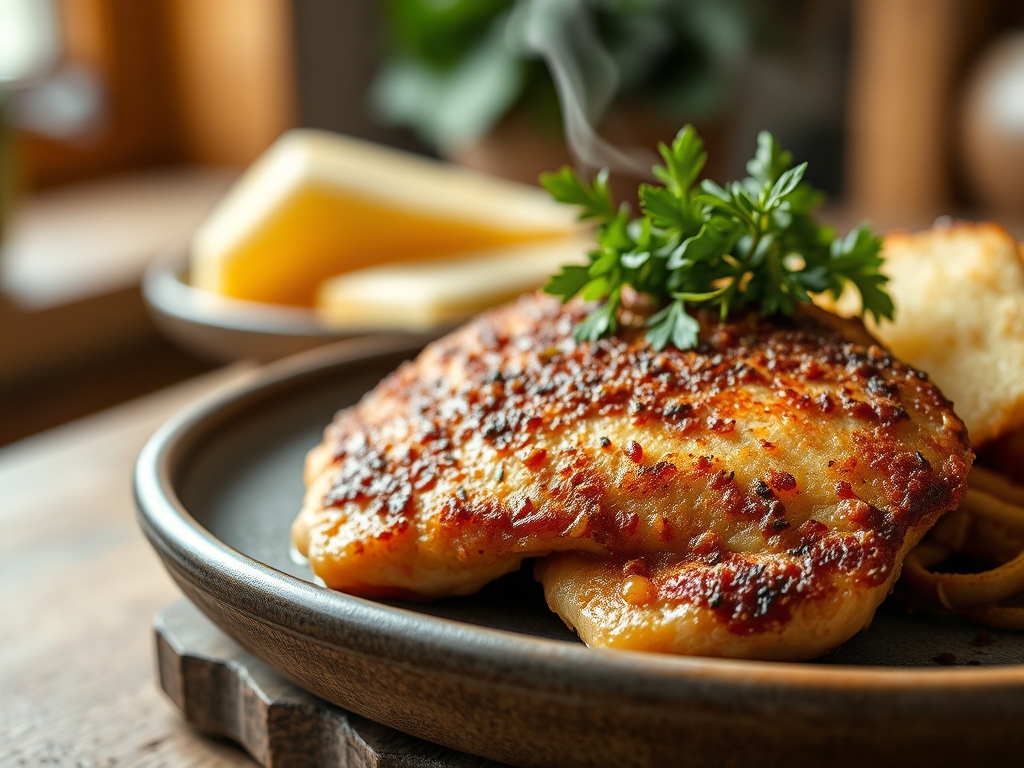
Listen to the sound of a kitchen operating at peak efficiency. It is the rhythmic, heavy thud of a meat mallet striking protein; it is the aggressive hiss of clarified butter meeting cold breadcrumbs. We are not just making dinner. We are engineering the German Schnitzel, a marvel of structural integrity and thermal dynamics. When done correctly, the coating should not merely cling to the meat; it should puff away like a golden, corrugated sail, creating a steam chamber that keeps the veal or pork impossibly succulent. This is the "souffle effect," a phenomenon where the moisture in the meat evaporates, pushes against the breading, and creates a pressurized pocket of flavor. If your breading is soggy, flat, or sliding off like a cheap suit, you have failed the mechanical adhesion test. We are here to ensure that never happens again. Grab your apron and calibrate your sensors. We are diving deep into the physics of the fry, the chemistry of the crust, and the absolute glory of the perfect golden cutlet.
THE DATA MATRIX
| Metric | Specification |
|---|---|
| Prep Time | 20 Minutes |
| Execution Time | 10 Minutes |
| Yield | 4 Servings |
| Complexity | 4 / 10 |
| Estimated Cost per Serving | $6.50 – $9.00 |
THE GATHERS
Ingredient Protocol:
- 4 Pork loins or Veal cutlets (approx. 170g / 6 oz each)
- 125g / 1 cup All-purpose flour
- 3 Large eggs, beaten until viscous
- 200g / 2 cups Fine breadcrumbs (not Panko)
- 250g / 1 cup Clarified butter or Lard
- 10g / 2 tsp Fine sea salt
- 5g / 1 tsp Freshly ground black pepper
- 1 Lemon, sliced into wedges for a piquant finish
- 30g / 2 tbsp Fresh parsley, minced
Section A: Ingredient Quality Audit:
If your breadcrumbs are too coarse, they will fail to create a continuous seal, leading to "oil seepage" into the meat. Technical fix: Pulse your crumbs in a food processor until they resemble fine sand. If your eggs are too thick, they will create a gummy layer that sloughs off in the pan. Technical fix: Add a teaspoon of water or oil to the egg wash to aerate the proteins and reduce surface tension. Finally, never use cold meat straight from the fridge. The thermal shock will cause the protein to contract too violently, ejecting the breading. Temper your meat at room temperature for 15 minutes before the audit begins.
THE MASTERCLASS
Step-by-Step Execution:
1. The Mechanical Abrasion Phase
Place the protein between two sheets of heavy-duty plastic wrap. Use the flat side of a professional meat mallet to pound the cutlet to a uniform thickness of 5mm. Work from the center outward to avoid tearing the muscle fibers.
Pro Tip: Uniformity is the soul of the German Schnitzel. A digital scale ensures each portion is identical, while the mallet creates micro-tears in the surface that allow the flour to anchor more effectively.
2. The Triple-Station Calibration
Set up three shallow trays. Tray one: Flour seasoned with salt and pepper. Tray two: Beaten eggs. Tray three: Breadcrumbs. Use a bench scraper to keep your workspace pristine and move the meat through the stations using the "dry hand, wet hand" method.
Pro Tip: Dreading is an exercise in protein-bonding. The flour absorbs surface moisture; the egg acts as a biological glue; the breadcrumbs provide the structural lattice.
3. The Aeration and Coating
Dredge the meat in flour and shake off every gram of excess. Dip into the egg wash, ensuring total coverage. Finally, lay the meat in the breadcrumbs. Do not press the crumbs into the meat. Simply toss them over and shake gently.
Pro Tip: If you press the crumbs, you destroy the air pockets required for the "souffle effect." You want a loose, delicate coat that can infuse with steam during the fry.
4. The Thermal Immersion
Heat clarified butter in a wide saucier or heavy skillet until it reaches 175C (350F). Lay the schnitzel away from you into the fat. The meat should swim, not sit. Shake the pan constantly in a circular motion so the hot fat washes over the top of the breading.
Pro Tip: This constant movement is "arrosage." It ensures the top of the breading sets at the same rate as the bottom, trapping steam and forcing the coating to puff upward.
5. The Final Render and Rest
Once the schnitzel is a deep mahogany gold, remove it and place it on a wire rack. Do not use paper towels, as they trap steam and turn the bottom soggy. Season immediately with a touch more salt while the surface oils are still active.
Pro Tip: Resting on a wire rack allows air to circulate around the entire geometry of the cutlet, maintaining the structural integrity of the crust.
Section B: Prep & Timing Fault-Lines:
The most common human error is "pan-crowding." If you drop two large schnitzels into a small pan, the oil temperature will plummet, resulting in a greasy, oil-logged mess. Use an infrared thermometer to monitor the fat. If the oil begins to smoke, it is breaking down chemically; discard it and start fresh. Timing is also critical. Once breaded, the schnitzel must be fried immediately. If it sits, the flour will hydrate and turn into a paste, ruining the mechanical adhesion.
THE VISUAL SPECTRUM
Section C: Thermal & Visual Troubleshooting:
Look at the Masterclass photo. Notice the "wavy" texture of the crust. This indicates successful steam expansion. If your schnitzel is flat and dark brown in spots but pale in others, your oil level was too low. The meat must be buoyant. If the color is dull and matte rather than glossy and golden, your fat was likely not clean or you used butter with too many milk solids. Always use clarified butter for that high-sheen, professional finish. If you see "bald spots" where the breading has vanished, you likely touched the meat too much with tongs during the flip. Use a wide spatula to support the entire surface area.
THE DEEP DIVE
Macro Nutrition Profile:
A standard 170g serving of German Schnitzel contains approximately 450 calories, 35g of protein, 25g of carbohydrates, and 22g of fat. While high in lipids due to the frying process, the use of clarified butter provides a cleaner fat profile than processed vegetable oils.
Dietary Swaps:
- Vegan: Use a thick slice of celery root (celeriac), parboiled, then breaded using a flax-seed "egg" and vegan breadcrumbs.
- Keto: Replace flour with almond flour and breadcrumbs with crushed pork rinds (chicharrones).
- GF: Use a 1:1 gluten-free flour blend and crushed gluten-free crackers for the crust.
Meal Prep & Reheating Science:
To maintain the molecular structure when reheating, avoid the microwave at all costs. The microwave excites water molecules, turning the crust into a rubbery sponge. Instead, use an air fryer at 190C for 3 minutes or a conventional oven on a wire rack. This re-crisps the fats without overcooking the internal protein.
THE KITCHEN TABLE
Why does my breading fall off in the pan?
Usually, this is caused by moisture on the surface of the meat. If the meat is not patted dry before the flour stage, a layer of steam forms between the meat and the crust, causing total structural collapse.
Can I use olive oil for frying?
No. Olive oil has a low smoke point and a strong flavor profile that competes with the delicate meat. Use clarified butter or lard to achieve the authentic, nutty flavor profile required for a true German Schnitzel.
How thin should the meat actually be?
Aim for 5mm. If it is too thick, the breading will burn before the interior reaches a safe temperature. If it is too thin, the meat will dry out and lose its "snap."
What is the best way to serve it?
Keep it simple. A wedge of lemon to deglaze the palate and a side of warm potato salad. The acidity of the lemon cuts through the richness of the rendered fats perfectly.