Forget everything you know about the cloying, marshmallow-topped sludge served at skating rinks. We are performing a structural audit of the original high-performance fuel: Aztec Hot Chocolate. This is not a beverage; it is a complex suspension of lipids, alkaloids, and capsaicin designed to ignite the nervous system. In its ancestral form, Xocolatl was never meant to be diluted by the bovine interference of dairy. We are chasing a specific, frothy architecture that relies on mechanical aeration and the natural emulsifiers found within the cacao bean itself. Imagine a liquid that is simultaneously dark, viscous, and piquant, hitting the palate with a velvet weight before the heat of the chili blossoms at the back of the throat. To master this, you must respect the physics of the emulsion. We are forcing water and fat into a stable alliance using nothing but heat and kinetic energy. Prepare your workspace. We are about to render the history of the sun into a cup.
THE DATA MATRIX
| Metric | Specification |
|---|---|
| Prep Time | 10 Minutes |
| Execution Time | 15 Minutes |
| Yield | 2 Servings (500ml total) |
| Complexity (1-10) | 6 (Precision Emulsification) |
| Estimated Cost per Serving | $3.50 – $5.00 |
THE GATHERS
Ingredient Protocol:
- 60g / 2.1 oz High-quality 100% Cacao Paste (unsweetened)
- 500ml / 2 cups Filtered Water
- 2g / 1 tsp Ground Ancho or Guajillo Chili
- 5ml / 1 tsp Pure Vanilla Extract
- 15g / 1 tbsp Raw Honey or Agave Nectar
- 1g / 0.5 tsp Ground Ceylon Cinnamon
- 1 pinch Sea Salt
Section A: Ingredient Quality Audit:
If your cacao smells like cardboard or lacks a glossy sheen, your emulsion will fail. Sub-par cacao often lacks the necessary cocoa butter content to create a viscous mouthfeel. Technical fix: If using a lower-fat cocoa powder instead of paste, you must supplement the lipid profile by adding 5g of virgin coconut oil or extra cocoa butter to ensure the mixture does not become watery. If your spices are dull, they have likely oxidized. Bloom them in a dry saucier for 30 seconds before adding liquid to wake up the essential oils.
THE MASTERCLASS
1. Precision Reduction and Infusion
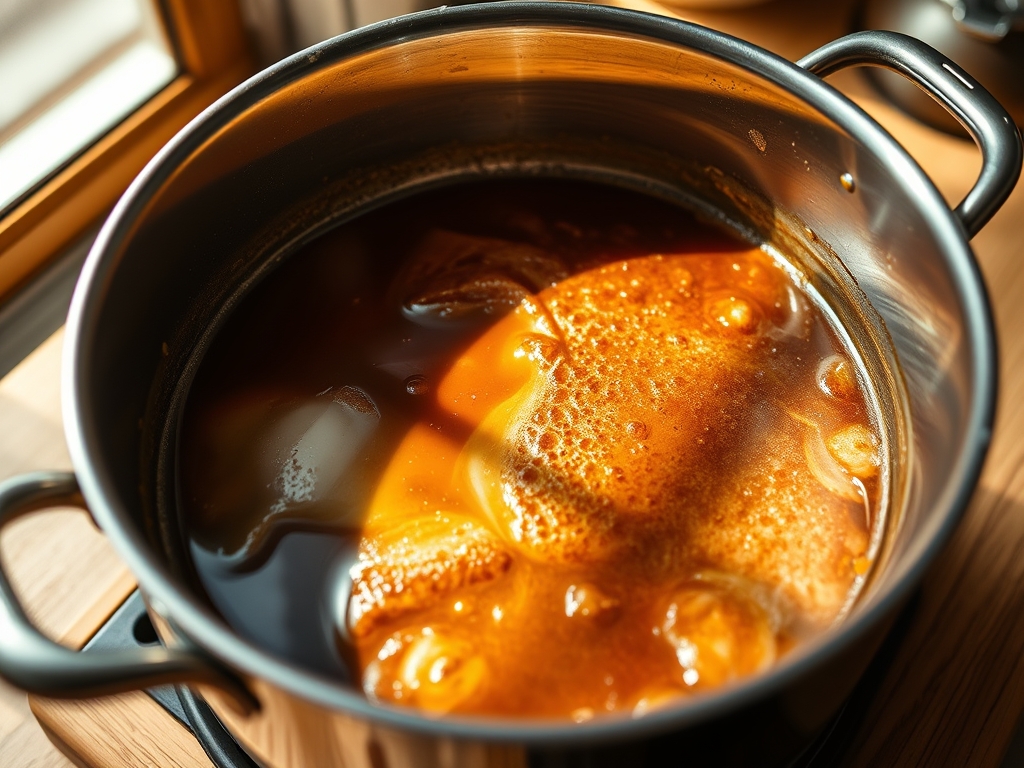
Place your filtered water, chili, cinnamon, and salt into a heavy-bottomed saucier. Bring the liquid to a simmer, not a rolling boil, to infuse the water with the dry aromatics. Use a digital scale to ensure your ratios are exact; even a half-gram deviation in chili can shift the profile from piquant to painful.
Pro Tip: The science here is extraction. Capsaicin is alcohol and fat soluble, but heat helps it disperse in water. Simmering for at least five minutes ensures the "bite" is integrated into the liquid rather than floating on top as irritating particles.
2. The Cacao Breakdown
While the liquid infuses, use a bench scraper or a sharp chef knife to finely shave the cacao paste. The smaller the particle size, the faster the melting process and the more stable the final suspension. Place the shavings into a heat-proof bowl.
Pro Tip: Surface area is your best friend in molecular gastronomy. By shaving the cacao, you prevent the core from scorching while waiting for the exterior to melt, preserving the delicate volatile aromatics of the bean.
3. Thermal Tempering
Slowly pour one-third of the hot infused liquid over the shaved cacao. Let it sit for 60 seconds to allow the latent heat to render the fats. Use a small whisk to stir from the center outward until a thick, glossy "mother paste" forms.
Pro Tip: This is the "seeding" phase of your emulsion. By creating a concentrated paste first, you are establishing a stable matrix of fat globules that will be easier to stretch as you add the remaining liquid.
4. High-Shear Aeration
Incorporate the remaining liquid and the honey. Now, use a traditional wooden molinillo or a high-speed immersion blender to aerate the mixture. You are looking for a thick, stable foam to rise to the surface.
Pro Tip: Mechanical shear breaks the cocoa butter into microscopic droplets. The proteins in the cacao then coat these droplets, preventing them from coalescing. A high-quality immersion blender provides the RPMs necessary to create a professional-grade froth that won't collapse.
Section B: Prep & Timing Fault-Lines:
The most common failure in Aztec Hot Chocolate is "breaking" the emulsion by overheating. If the liquid exceeds 190 degrees Fahrenheit, the fats may separate, leaving an oily slick on top. Always use a digital thermometer. If the mixture separates, remove from heat immediately and add a teaspoon of cold water while blending at high speed to "shock" the emulsion back into a cohesive state.
THE VISUAL SPECTRUM
Section C: Thermal & Visual Troubleshooting:
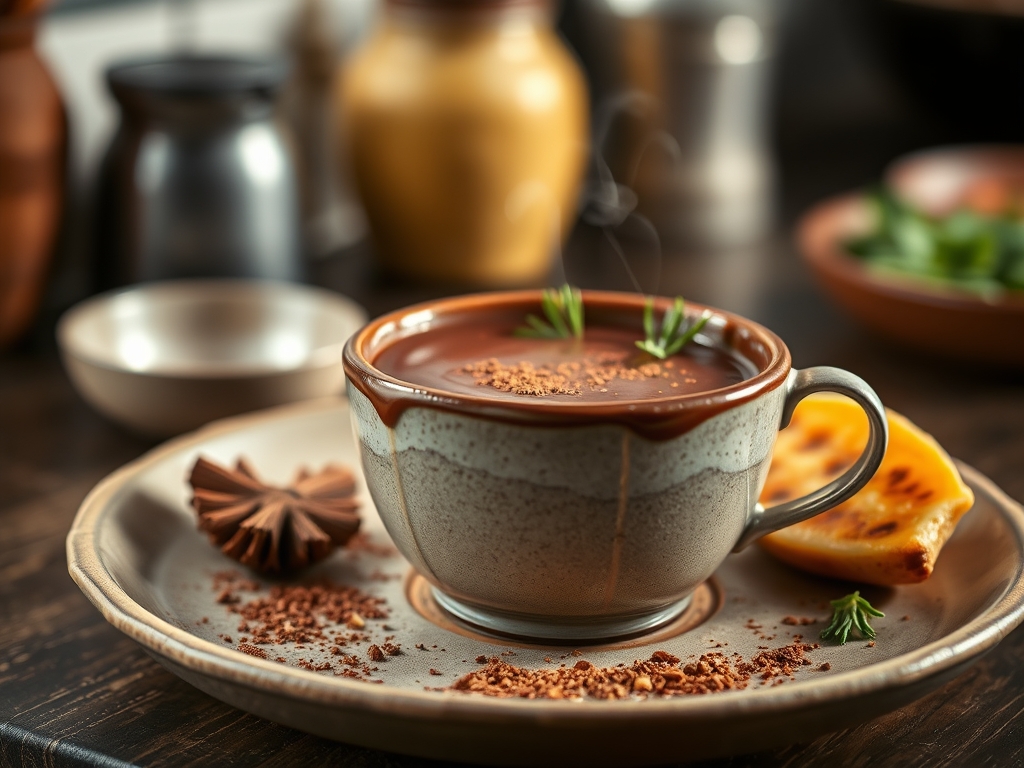
Referencing the Masterclass photo, your final product should exhibit a deep, mahogany hue with a micro-foam head that persists for at least three minutes. If your drink looks grey or light brown, your cacao-to-water ratio is too low or your cacao is poor quality. If the foam is "bubbly" rather than "creamy," you have not applied enough shear force during the aeration step. A dull surface indicates the fats have not been properly emulsified; the light should reflect off the surface in a continuous, silky sheen.
THE DEEP DIVE
Macro Nutrition Profile:
A single serving provides approximately 180 calories, 14g of healthy fats (mostly stearic acid), 4g of fiber, and 3g of protein. It is a powerhouse of flavonoids and magnesium, making it an ideal pre-workout or cognitive enhancer.
Dietary Swaps:
- Vegan: Use agave or maple syrup instead of honey.
- Keto: Replace honey with three drops of liquid monk fruit or stevia.
- GF: Naturally gluten-free, but ensure your spices aren't processed in a facility with cross-contamination.
Meal Prep & Reheating Science:
You can batch-prepare the "mother paste" and store it in the fridge for up to seven days. To reheat, do not microwave. Microwaves create uneven "hot spots" that will rupture the fat cells and break the emulsion. Always reheat gently in a saucier on low heat, whisking constantly to maintain the molecular structure.
THE KITCHEN TABLE
Why is my chocolate grainy?
This usually indicates the cacao paste wasn't shaved finely enough or the water wasn't hot enough to fully melt the particles. Use a high-speed blender for 60 seconds to pulverize any remaining solids into a smooth viscous liquid.
Can I use cocoa powder instead?
Yes, but you will lose the luxurious mouthfeel provided by the cocoa butter in the paste. If using powder, add a teaspoon of coconut oil to provide the necessary lipids for a stable, creamy emulsion.
What is the purpose of the salt?
Salt is a flavor bridge. It suppresses bitterness while enhancing the perception of sweetness and the complexity of the chili. It also helps to stabilize the protein structures in the foam.
My foam disappears instantly. Why?
Your aeration was likely too weak. To get a lasting froth, you need high-shear force. If using a molinillo, you must rub it between your palms vigorously for at least two minutes until your arms ache.
Is the chili mandatory?
Technically, no, but it is historically essential. The capsaicin acts as a vasodilator, increasing blood flow and speeding the absorption of the cacao's antioxidants into your system. It is the "engine" of the drink.