Forget the tepid, watery apologies for soup found in airport lounges. We are here to discuss the architecture of the ultimate Spanish Gazpacho; a cold-extraction marvel that functions more like a liquid emulsion than a salad. This is a high-velocity collision of acidity, fat, and lycopene. When executed with precision, it offers a piquant vibration on the tongue that no heat-treated soup can replicate. We are looking for a texture so silky it coats the back of a spoon, achieved not through heavy cream, but through the mechanical suspension of high-quality olive oil within a matrix of pulverized vegetable fibers. The aroma should be a sharp, garden-fresh assault of vinegar and greenhouse heat. If your current recipe resembles a chunky salsa or a diluted tomato juice, your culinary infrastructure is failing. We are going to audit your process, optimize your ingredient ratios, and ensure that every milliliter of this elixir serves a purpose. Prepare your palate for a masterclass in thermal stability and vegetable hydraulics.
THE DATA MATRIX
| Metric | Specification |
|---|---|
| Prep Time | 25 Minutes |
| Execution Time | 12 Hours (Chilling Required) |
| Yield | 1.5 Liters / 6 Servings |
| Complexity (1-10) | 4 |
| Estimated Cost per Serving | $1.85 |
THE GATHERS
Ingredient Protocol:
- 1 kg / 2.2 lbs Ripe Roma or Plum Tomatoes (cored)
- 1 Green Bell Pepper (150g / 5.3 oz) (deseeded)
- 1 Cucumber (200g / 7 oz) (peeled and deseeded)
- 1/2 White Onion (75g / 2.6 oz)
- 1 Clove Garlic (5g / 0.17 oz) (germ removed)
- 30ml / 2 tbsp Sherry Vinegar (Vinagre de Jerez)
- 120ml / 0.5 cup Extra Virgin Olive Oil (Arbequina preferred)
- 10g / 2 tsp Sea Salt
- 50g / 1.7 oz Stale Sourdough Bread (crust removed)
Section A: Ingredient Quality Audit:
The primary failure point in Spanish Gazpacho is the use of out-of-season, mealy tomatoes. If your tomatoes lack the necessary sugar-to-acid ratio, the resulting soup will be thin and metallic. Technical fix: Increase the salt concentration slightly to draw out more solutes and add 5g of granulated sugar to balance the pH. If your cucumbers are bitter, it is likely due to high levels of cucurbitacin near the skin; ensure you peel them deeply and remove the seeds to maintain a clean flavor profile. Finally, never use "light" olive oil. You require the polyphenols found in extra virgin varieties to properly infuse the emulsion with its signature peppery finish.
THE MASTERCLASS
Step 1: The Maceration Phase
Combine all chopped vegetables, the bread, salt, and vinegar in a large non-reactive bowl. Toss thoroughly and allow to sit at room temperature for 30 to 60 minutes.
Step 2: High-Shear Pulverization
Transfer the macerated mixture into a high-speed blender. Do not overcrowd the canister; work in batches if necessary. Process on the highest setting for 2 full minutes.
Step 3: The Emulsion Stream
While the blender is running at medium speed, slowly stream in the extra virgin olive oil. This creates a stable suspension of oil droplets within the vegetable juice.
Step 4: The Refinement Strain
Pass the mixture through a fine-mesh chinois or sieve into a clean saucier or pitcher. Use the back of a ladle to push the liquid through, discarding the fibrous solids.
Step 5: Thermal Stabilization
Cover the container and refrigerate for a minimum of 4 hours, though 12 hours is optimal. This allows the flavors to marry and the texture to thicken as the starches hydrate.
Section B: Prep & Timing Fault-Lines:
The most common timing error is serving the gazpacho too soon after blending. The friction from high-speed blades can raise the temperature of the liquid, which dulls the piquant edge of the vinegar. Always use a digital scale for your salt and vinegar measurements; "eyeballing" leads to inconsistent salinity that can ruin the delicate balance of the tomatoes. If the soup separates after chilling, it indicates a failed emulsion. This is usually caused by adding the oil too quickly. To fix, re-blend the chilled soup for 30 seconds to re-incorporate the fats.
THE VISUAL SPECTRUM
Section C: Thermal & Visual Troubleshooting:
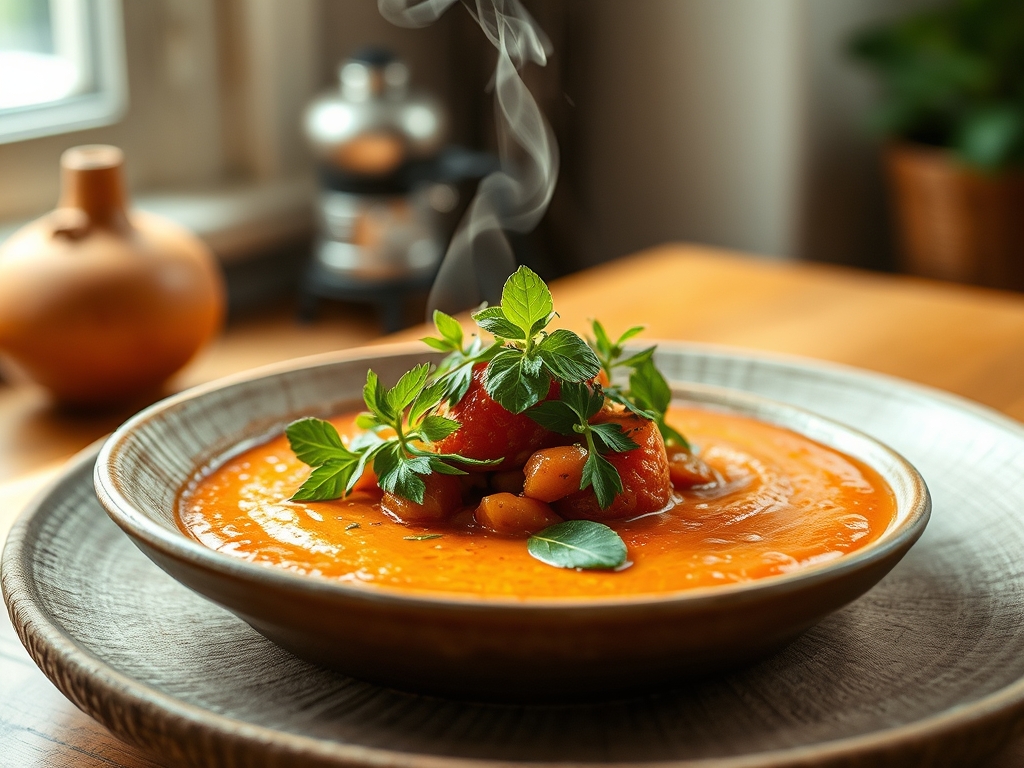
Referencing the Masterclass photo, your gazpacho should exhibit a vibrant, creamy orange hue rather than a deep blood red. This lighter color is a visual cue that the olive oil has been successfully emulsified into the tomato juice. If your soup appears dull or brownish, your tomatoes were likely over-oxidized during a slow blending process or you used a low-quality vinegar. If you see green flecks, the cucumber or pepper was not blended long enough. To achieve the glossy surface seen in the image, ensure you strain the liquid twice. Any visible foam on top should be skimmed off with a spoon or allowed to settle during the chilling phase to ensure a glass-smooth finish.
THE DEEP DIVE
Macro Nutrition Profile:
Per serving, this Spanish Gazpacho provides approximately 180 calories, 14g of healthy monounsaturated fats, 12g of carbohydrates, and 2g of protein. It is a powerhouse of Vitamin C and Lycopene, an antioxidant that becomes more bioavailable when paired with fats like olive oil.
Dietary Swaps:
- Vegan: Naturally vegan as written.
- Keto: Omit the sourdough bread; increase the olive oil by 20ml to maintain viscosity.
- GF: Use a certified gluten-free stale bread or 1/4 of a peeled avocado to provide the necessary creamy structure.
Meal Prep & Reheating Science:
Never reheat gazpacho. Heat will denature the fresh enzymes and destroy the volatile aromatic compounds that give the soup its life. For storage, use an airtight glass container to prevent the absorption of refrigerator odors. The soup will stay molecularly stable for up to 3 days. Before serving, give it a quick whisk to aerate the mixture and restore the velvety mouthfeel.
THE KITCHEN TABLE
Why is my gazpacho orange instead of red?
The orange color is a sign of a perfect emulsion. When you blend olive oil at high speeds with tomato juice, the oil droplets scatter light, shifting the visual spectrum from deep red to a creamy, pale orange.
Can I skip the straining step?
You can, but you will be eating a "rustic" vegetable smoothie. Straining removes the tough skins and seeds that the blender cannot fully liquefy, resulting in the professional, silky texture required for a true Spanish Gazpacho.
What is the best vinegar to use?
Authenticity demands Sherry Vinegar (Vinagre de Jerez). It provides a complex, nutty acidity that apple cider or balsamic vinegar cannot match. If you must substitute, use a high-quality red wine vinegar.
Why do I need to add bread?
Bread acts as a stabilizer. The starches in the stale bread bind the water and oil together, preventing the soup from leaking liquid on the plate and providing a more substantial, viscous mouthfeel.
Should I peel the tomatoes?
There is no need to peel them if you are using a high-speed blender and a fine-mesh strainer. The strainer will catch the skins, saving you the labor-intensive process of blanching and shocking the fruit.