Imagine a world where salt is not a seasoning but a structural engineer. You are standing in a high-latitude kitchen; the air is crisp; the smell of fresh dill and sea salt is almost viscous in its intensity. This is the realm of Scandinavian Gravlax. We are not merely cooking; we are engaging in a high-stakes game of osmotic moisture extraction. This is a process where the cellular walls of a pristine salmon fillet are subjected to a chemical gradient so powerful it forces water out and pulls flavor in. The result is a texture that sits somewhere between silk and velvet. It is a piquant transformation that turns raw protein into a cured masterpiece. Forget the heat of the stove. Here, time and pressure are your primary heating elements. As an auditor of culinary infrastructure, I demand precision. If your salt-to-sugar ratio is off by even a fraction, the structural integrity of the fish collapses. We are building a flavor profile that is both ancient and cutting-edge. Let us begin the audit.
THE DATA MATRIX
| Metric | Specification |
|---|---|
| Prep Time | 25 Minutes |
| Execution Time | 36 to 72 Hours |
| Yield | 10 to 12 Servings |
| Complexity (1-10) | 4 |
| Estimated Cost per Serving | $4.50 – $6.00 |
THE GATHERS
Ingredient Protocol:
- 1 kg / 2.2 lbs Fresh Center-Cut Salmon Fillet (Skin on, pin bones removed)
- 100g / 0.5 cup Granulated White Sugar
- 150g / 0.75 cup Coarse Sea Salt (Do not use table salt)
- 30g / 1.5 cups Fresh Dill (Finely chopped, including stems)
- 10g / 2 tbsp Toasted White Peppercorns (Crushed)
- 30ml / 2 tbsp Aquavit or Gin (Optional for botanical infusion)
- 5g / 1 tsp Lemon Zest (Microplaned)
Section A: Ingredient Quality Audit:
The most common failure point in Scandinavian Gravlax is the raw material. If your salmon smells "fishy" before you start, the cure will only amplify that decomposition. Ensure you are using sushi-grade or flash-frozen wild-caught salmon to mitigate parasite risks. If the flesh feels mushy, it has already begun to render its internal moisture through poor handling; reject it. Another audit failure is using iodized table salt. The iodine creates a metallic, bitter aftertaste that ruins the delicate balance of the fish. Always opt for high-purity sea salt or kosher salt. If your dill is wilted, it will not infuse the oil-based aromatics into the flesh. To fix sub-par dill, shock it in ice water for ten minutes before chopping to reactivate the cellular turgor pressure.
THE MASTERCLASS
Step 1: The Surface Preparation
Place your salmon fillet on a clean workstation. Use a bench scraper to ensure the surface is clear of any debris. Pat the fish bone-dry with lint-free towels. Moisture on the surface at this stage creates a barrier that prevents the salt from initiating the osmotic draw.
Pro Tip: Use a digital scale to weigh your fish after trimming. The salt-to-sugar ratio should be roughly 15 percent of the total weight of the protein to ensure a safe and effective cure. This is the foundation of the osmotic infrastructure.
Step 2: The Cure Matrix Formulation
In a small stainless steel saucier or mixing bowl, combine the salt, sugar, crushed peppercorns, and lemon zest. Mix until the texture is uniform. The sugar acts as a humectant; it keeps the fish from becoming overly tough while the salt does the heavy lifting of moisture extraction.
Pro Tip: Toasting the peppercorns before crushing them releases essential oils that are fat-soluble. Since salmon is a fatty fish, these oils will infuse more deeply into the flesh during the long cure time.
Step 3: Application and Encapsulation
Lay out a large piece of plastic wrap. Place half of the dill on the wrap, followed by the salmon (skin side down). Rub the Aquavit over the flesh, then pack the salt and sugar mixture firmly onto the fish. Top with the remaining dill. Wrap the fish tightly; this creates the necessary pressure for the cure to penetrate.
Pro Tip: Use a heavy weight, such as a cast iron skillet or a brick wrapped in foil, to press the fish. This physical pressure accelerates the moisture extraction and ensures a dense, professional texture.
Step 4: The Cold-Storage Phase
Place the wrapped and weighted fish into a glass or stainless steel tray. Refrigerate at a consistent 3 degrees Celsius (38 degrees Fahrenheit). Every 12 hours, flip the package and drain any liquid that has pooled in the tray. This liquid is the extracted moisture from the salmon cells.
Pro Tip: The duration of the cure dictates the final texture. 36 hours yields a "mild" cure, while 72 hours results in a firm, traditional Scandinavian texture. Monitor the firmness by pressing the thickest part of the fillet through the wrap.
Section B: Prep & Timing Fault-Lines:
Timing is the silent killer in this recipe. If you leave the salmon in the cure for too long (over 96 hours), the salt will completely denature the proteins, turning the fish into a salty, leathery puck. Conversely, pulling it too early results in a raw center that lacks the translucent, cured appearance. Temperature control is equally vital. If your refrigerator fluctuates above 5 degrees Celsius, you risk bacterial growth. Use a calibrated probe thermometer to audit your fridge's internal climate before starting the process.
THE VISUAL SPECTRUM
Section C: Thermal & Visual Troubleshooting:
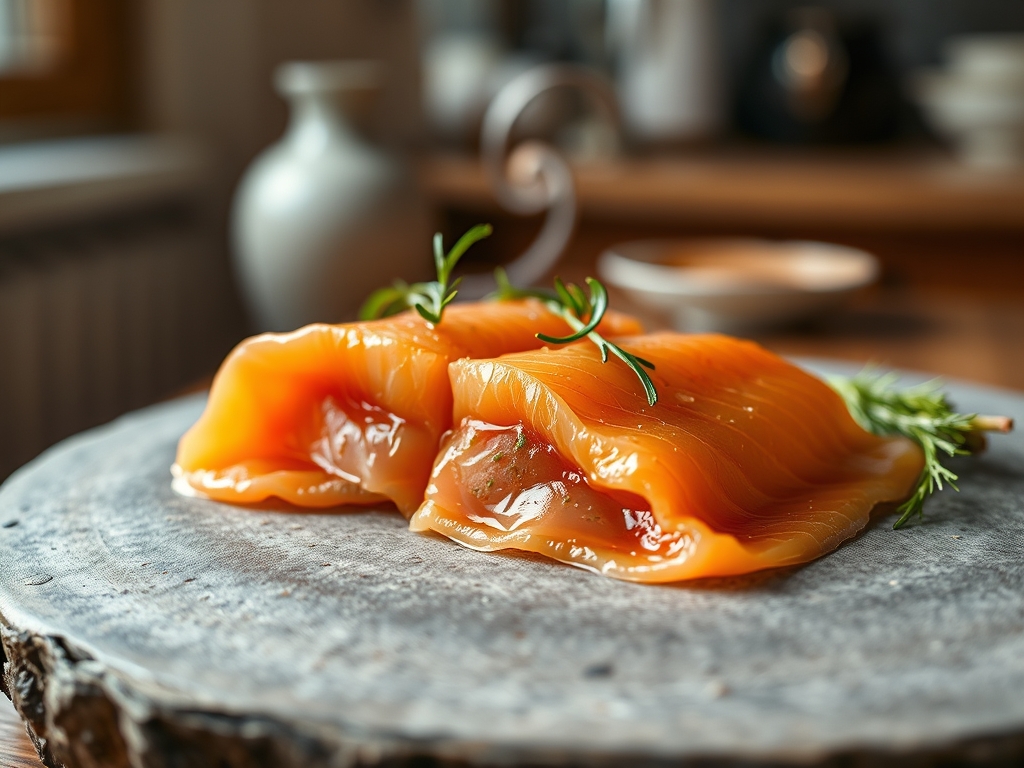
Referencing the Masterclass photo, your Gravlax should exhibit a vibrant, deep coral hue with a translucent edge. If the fish appears opaque or "cooked," you have likely used too much acid (lemon juice) rather than just the zest. Acid denatures protein differently than salt. If the color is dull or grey, your salmon was likely oxidized before the cure began. To fix uneven coloring, ensure the cure mixture is spread with absolute uniformity across the entire surface of the fillet. If you notice white spots, these are albumin deposits; they indicate that the salt concentration was too high in specific areas. Simply rinse the fish under cold water and pat dry to improve the visual finish.
THE DEEP DIVE
Macro Nutrition Profile:
Per 100g serving, Scandinavian Gravlax is a powerhouse of Omega-3 fatty acids. It typically contains 180 calories, 20g of protein, and 10g of healthy fats. Because this is a cured product, the sodium content is significantly higher than fresh fish; usually around 600mg to 800mg per serving.
Dietary Swaps:
- Vegan: Use large carrots. Peel them into wide strips, steam until tender, and use the same cure mixture (minus the pressure) to create "Carrot Lox."
- Keto: Replace the granulated sugar with an erythritol-based sweetener. Note that the osmotic pull will be slightly less efficient, so extend the cure time by 12 hours.
- Gluten-Free: This recipe is naturally gluten-free, but ensure your Aquavit or Gin is distilled and certified GF.
Meal Prep & Reheating Science:
Never reheat Gravlax. Heat will destroy the delicate molecular structure achieved through curing, turning it into standard cooked salmon. For meal prep, slice the fish thinly and store it in an airtight container with a light coating of neutral oil to prevent oxidation. It will maintain its structural integrity for up to five days in the refrigerator.
THE KITCHEN TABLE
How do I know if the salmon is fully cured?
The flesh should feel firm to the touch and appear translucent rather than opaque. When sliced, it should hold its shape without tearing. If it feels soft or mushy, return it to the cure for another 12 hours.
Can I use frozen salmon for this recipe?
Yes. In fact, using previously frozen salmon is safer as the freezing process kills potential parasites. Just ensure the fish is fully thawed and patted dry before you apply the salt and sugar matrix.
Why is my Gravlax too salty?
This usually happens if the fish was left in the cure too long or if the salt was too fine. To fix this, rinse the fillet under cold water for 60 seconds and pat dry. This removes surface salinity.
What is the best way to slice Gravlax?
Use a long, thin, flexible slicing knife. Hold the knife at a 45-degree angle and cut against the grain into paper-thin slices. The goal is to maximize surface area for the best flavor release.
Can I freeze the finished Gravlax?
Yes, you can freeze it for up to two months. Wrap it tightly in plastic and then foil to prevent freezer burn. Defrost slowly in the refrigerator to maintain the moisture levels within the protein cells.