The steel blade does not merely cut; it interrogates. When we discuss Japanese Sashimi, we are not talking about a simple appetizer. We are analyzing the structural integrity of muscle fibers at a cellular level. Imagine a slab of Bluefin Tuna or King Salmon resting on your station. To the untrained eye, it is dinner. To the culinary auditor, it is a complex lattice of proteins, lipids, and moisture that must be navigated with surgical precision. If your knife is dull, you are not slicing; you are bruising. You are crushing the delicate cells and forcing the intracellular fluids to leak onto the board, destroying the mouthfeel and dulling the flavor profile. We demand a clean, tectonic shift. The goal is a surface so smooth it reflects light like polished obsidian. This is the intersection of physics and gastronomy. We are here to audit your technique, optimize your workflow, and ensure that every gram of raw protein maintains its absolute biological dignity from the ocean to the palate.
THE DATA MATRIX
| Metric | Specification |
|---|---|
| Prep Time | 20 Minutes |
| Execution Time | 10 Minutes |
| Yield | 4 Servings |
| Complexity (1-10) | 9 |
| Estimated Cost per Serving | $18.00 / 16.50 Euro |
THE GATHERS
Ingredient Protocol:
- 500g / 1.1 lbs Sashimi-grade Ahi Tuna or Salmon
- 60ml / 4 tbsp High-sodium Soy Sauce
- 15g / 1 tbsp Fresh Wasabi Root (grated)
- 100g / 3.5 oz Daikon Radish (shredded)
- 30ml / 2 tbsp Rice Vinegar
- 5g / 1 tsp Pickled Ginger (Gari)
- 10ml / 2 tsp Toasted Sesame Oil
Section A: Ingredient Quality Audit:
The primary failure point in Japanese Sashimi is the "drip loss" associated with improper thawing or storage temperatures. If your fish feels tacky or leaves a puddle on the cutting board, the cellular walls have collapsed. To fix this, implement a dry-aging technique in the refrigerator for 2 hours. Wrap the protein in specialized absorbent culinary paper to infuse the exterior with a firmer texture. If the fish lacks the signature translucent glow, it has likely oxidized. You can briefly render a more vibrant appearance by dipping the block in an ice-cold brine (3% salinity) for sixty seconds to tighten the surface proteins before the final audit.
THE MASTERCLASS
Step 1: Thermal Stabilization and Calibration
Place your protein on a chilled stainless steel tray. Use a digital thermometer to ensure the internal temperature is between 0 and 2 degrees Celsius. This temperature range ensures the lipids remain solid, providing the necessary resistance against the blade.
Pro Tip: Use a digital scale to weigh your portions before slicing. Maintaining a consistent mass ensures that the seasoning-to-protein ratio remains mathematically perfect across all servings.
Step 2: The Single-Stroke Kinetic Execution
Position your Yanagiba (sashimi knife) at the heel of the blade. In one fluid, continuous motion, pull the knife toward you. Do not saw. The weight of the blade should do 80% of the work, allowing the edge to glide through the connective tissue without compression.
Pro Tip: Keep a damp bench scraper nearby to clear your workspace of any micro-debris. A clean board prevents cross-contamination of textures and ensures the "face" of the slice remains pristine.
Step 3: Aeration of the Garnish
Take your shredded Daikon and soak it in ice water for five minutes. Drain it thoroughly and use a salad spinner or clean towel to aerate the fibers. This creates a structural "nest" that lifts the fish, preventing it from sitting in its own juices.
Pro Tip: Use a small saucier or precision carafe to plate your soy sauce. This prevents splashing and allows for a controlled, aesthetic pour that does not overwhelm the delicate fish.
Step 4: Emulsification of the Accoutrements
If you are serving a citrus-based ponzu, whisk your soy sauce and rice vinegar vigorously. You want to slightly deglaze the palate with the acidity, ensuring the fats in the fish do not coat the tongue too heavily.
Pro Tip: Calibration is key. Use a digital scale to measure your liquid ratios. A 2:1 ratio of soy to acid is standard, but high-fat "Toro" cuts may require a more piquant adjustment.
Section B: Prep & Timing Fault-Lines:
The most common human error is "thermal drift." Leaving the fish at room temperature for even five minutes can cause the fats to soften, leading to a "mushy" mouthfeel. If you miss your window, return the protein to a blast chiller or the coldest part of the fridge immediately. Another timing error is prepping the Daikon too early; if it sits, it loses its turgidity and becomes viscous. Always shred and chill the garnish exactly ten minutes before the final assembly to maintain that crisp, structural contrast.
THE VISUAL SPECTRUM
Section C: Thermal & Visual Troubleshooting:
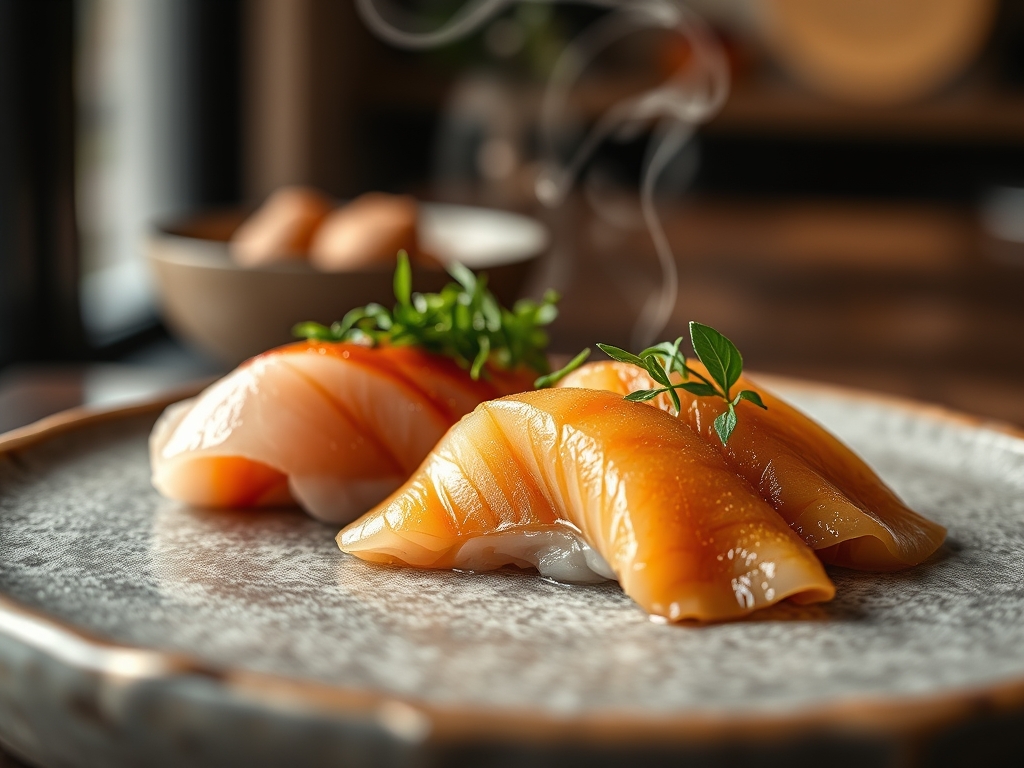
Look at the Masterclass photo above. Notice the "shimmer" on the surface of the tuna. This is the visual cue for a perfect slice; it indicates that the moisture is trapped within the cells, not smeared across the surface. If your fish looks dull or matte, your knife is likely micro-chipped or dull, causing friction burns on the protein. If the edges of your slices are "frayed" rather than sharp, you are applying too much downward pressure. To fix this, sharpen your blade to a 10-degree angle and focus on the "pull" rather than the "push." If the color of the salmon appears pale, ensure you are not using a high-intensity warm light in the kitchen, which can artificially age the appearance of the lipids.
THE DEEP DIVE
Macro Nutrition Profile
Japanese Sashimi is a powerhouse of high-density lipoproteins and lean protein. A standard 150g serving provides approximately 35g of protein, 12g of healthy fats (Omega-3s), and near-zero carbohydrates. It is the gold standard for clean, efficient fueling.
Dietary Swaps
- Vegan: Utilize "Zalmon" (marinated konjac or tomato-based analogs). Use liquid smoke to infuse a deep, umami profile.
- Keto: Naturally compliant. Increase the use of avocado slices to boost healthy fat ratios.
- GF: Ensure the soy sauce is replaced with Tamari to eliminate gluten-based thickeners.
Meal Prep & Reheating Science
Sashimi should never be reheated. The molecular structure of raw fish is held together by delicate hydrogen bonds that collapse at 40 degrees Celsius. If you must store leftovers, "sear" the exterior briefly in a hot pan to render the outer fats, creating a "Tataki" style dish. This preserves the interior cellular integrity while providing a safe, cooked exterior for short-term storage.
THE KITCHEN TABLE
Why is my fish sticking to the knife?
Surface tension. Wipe your blade with a cloth dipped in a vinegar-water solution between every two slices. This neutralizes the proteins and allows the blade to glide without dragging the meat.
Can I use a standard chef's knife?
You can, but the bevel is too wide. A standard knife wedges the meat apart, whereas a single-bevel Japanese blade shears it. If using a chef's knife, ensure it is terrifyingly sharp.
How do I know if the fish is truly "Sashimi Grade"?
It is a marketing term, not a legal one. Trust your auditor's eye. Look for clear eyes, red gills (if whole), and a firm, elastic texture that springs back when touched.
What is the best way to grate fresh wasabi?
Use a sharkskin grater (orochi). Move the root in a circular motion to aerate the paste. This releases the volatile oils, creating a creamy, spicy finish rather than a watery mess.