Stop thinking of Peruvian Ceviche as a mere salad of raw fish; it is a high speed chemical engineering project performed in a bowl. When you submerge cubes of pristine sea bass into a bath of lime juice, you are not cooking with heat. You are initiating a process of acid denaturation. The citric acid molecules aggressively attack the folded proteins of the fish, forcing them to unwind and recombine into a solid, opaque matrix that mimics the texture of poached seafood. This is the ultimate culinary paradox. It is cold, yet chemically cooked. It is piquant, yet deeply savory. The legendary leche de tigre, or tiger's milk, acts as the conductive fluid for this transformation. If your acid balance is off by even a few milliliters, the fish becomes a mushy, over-cured disaster. If your temperature control fluctuates, the volatile aromatics evaporate into nothingness. We are here to audit your infrastructure and ensure your station is optimized for the most aggressive, vibrant, and technically perfect ceviche on the planet.
THE DATA MATRIX
| Metric | Specification |
|---|---|
| Prep Time | 25 Minutes |
| Execution Time | 5 Minutes |
| Yield | 4 Servings |
| Complexity (1-10) | 7 |
| Estimated Cost per Serving | $12.50 |
THE GATHERS
Ingredient Protocol:
- 500g / 1.1 lbs Sushi-grade White Fish (Flounder, Sea Bass, or Grouper)
- 240ml / 1 cup Freshly Squeezed Key Lime Juice
- 150g / 5.3 oz Red Onion (Julienned and rinsed)
- 10g / 0.35 oz Aji Limo or Habanero Pepper (Finely minced)
- 5g / 1 tsp Sea Salt (Fine grain for rapid dissolution)
- 15g / 1 tbsp Fresh Cilantro (Finely chopped)
- 120g / 4.2 oz Boiled Sweet Potato (Sliced into rounds)
- 60g / 2.1 oz Large-kernel Corn (Choclo, boiled)
- 50ml / 1.7 fl oz Chilled Fish Stock (Optional for the leche de tigre base)
Section A: Ingredient Quality Audit:
The primary failure point in Peruvian Ceviche is the structural integrity of the fish. If your protein feels viscous or slimy rather than firm, the denaturation process will fail to create a clean bite. To fix sub-par fish, perform a dry brine. Dust the fillets with salt for ten minutes then rinse and pat dry with lint-free towels before slicing. This draws out excess moisture and tightens the protein fibers. If your limes are bitter, you are likely over-squeezing. Stop the press before the pith releases its tannins. If the onions are too pungent, soak them in an ice-water bath for ten minutes to infuse them with crispness while leaching out the aggressive sulfur compounds that would otherwise overwhelm the delicate fish.
THE MASTERCLASS
1. Precision Protein Fabrication
Slice your chilled fish into uniform 2cm cubes. Consistency is not just for aesthetics; it ensures that every piece of fish reaches the same level of acid penetration at the exact same moment. Use a razor-sharp sushi knife or a high-carbon steel chef knife to avoid tearing the delicate flesh.
Pro Tip: Use a digital scale to ensure your fish-to-acid ratio remains constant. Inconsistent sizing leads to "gradient curing" where the exterior is rubbery while the interior remains raw and flabby.
2. The Salt Initiation
Place the fish in a stainless steel mixing bowl and toss with the sea salt. Let it sit for sixty seconds before adding any liquid. This allows the salt to begin breaking down the surface proteins, which creates a tacky surface that will better hold the citrus juices later.
Pro Tip: Use a bench scraper to transfer your fish cubes from the cutting board to the bowl. This minimizes heat transfer from your hands, keeping the protein at a safe, crisp temperature.
3. Emulsifying the Leche de Tigre
Add the minced peppers and the lime juice. Use a chilled metal spoon to stir the mixture vigorously for thirty seconds. You will notice the liquid turning slightly opaque and milky. This is the protein-enriched "tiger's milk" forming as the fish juices mingle with the acid.
Pro Tip: Professional chefs often use a small saucier or a whisk to aerate the liquid slightly, which helps distribute the capsaicin from the peppers evenly throughout the emulsion.
4. The Final Integration
Fold in the julienned red onions and chopped cilantro. The onions should only be in the acid for the final sixty seconds to ensure they maintain their structural snap. Arrange the sweet potato and corn on the side of the plate to provide a starchy counterpoint to the acidity.
Pro Tip: Serve immediately in chilled glassware. The residual heat from a room-temperature plate can accelerate the curing process, turning your masterpiece into a rubbery mess in minutes.
Section B: Prep & Timing Fault-Lines:
The most common human error is the "over-cure." Many novices believe ceviche needs to marinate for hours. This is false. True Peruvian Ceviche is prepared "a la minute." The fish should only spend three to five minutes in the lime juice. Any longer and the acid will render the fish dry and chalky. If you find your timing is lagging, keep your mixing bowl nested inside a larger bowl filled with ice. This slows down the molecular movement and gives you a wider window of success.
THE VISUAL SPECTRUM
Section C: Thermal & Visual Troubleshooting:
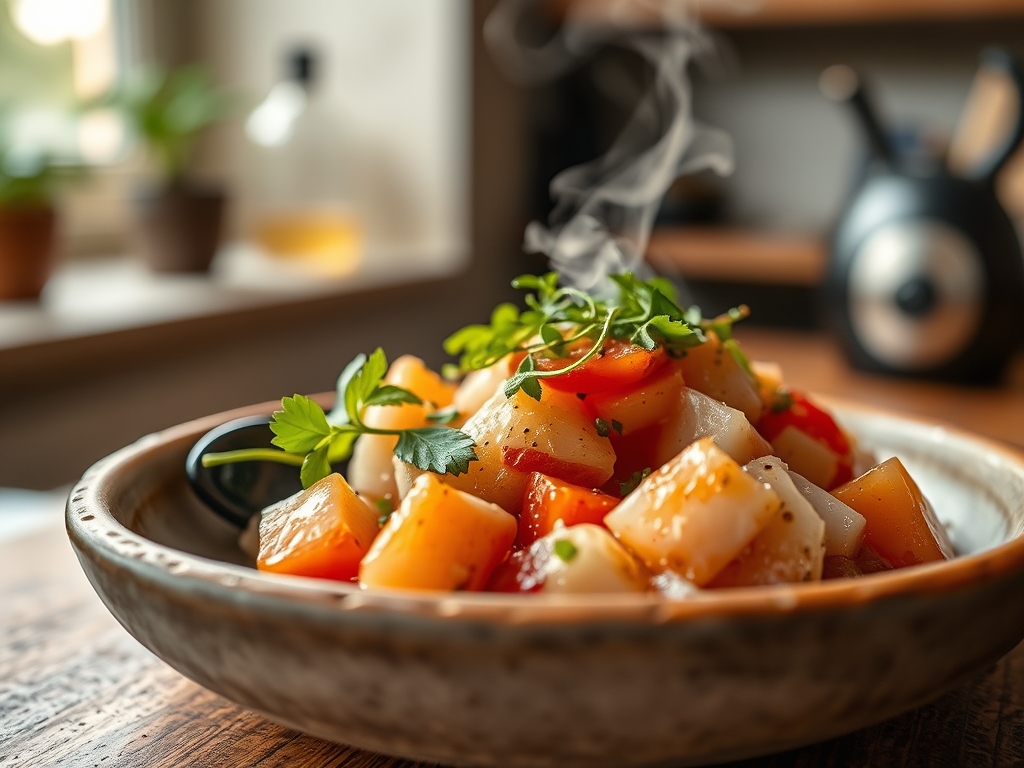
Look at the Masterclass photo above. Notice the crystalline clarity of the onions and the vibrant, matte finish of the fish. If your ceviche looks dull or gray, your acid is likely too weak or your fish was not cold enough. If the liquid looks "broken" rather than milky, you may have skipped the salt-first step. To fix a dull appearance, add a splash of chilled fish stock or even a teaspoon of ginger juice to brighten the visual profile and add a piquant kick. If the cilantro looks wilted, it was likely chopped with a dull blade, bruising the cells rather than slicing them. Always use a freshly honed edge to ensure those greens pop against the white fish.
THE DEEP DIVE
Macro Nutrition Profile:
Peruvian Ceviche is a nutritional powerhouse. A standard serving contains approximately 250 calories, 35g of protein, 5g of healthy fats (Omega-3s), and 15g of complex carbohydrates from the sweet potato and corn. It is naturally low in saturated fats and high in Vitamin C.
Dietary Swaps:
- Vegan: Replace the fish with king oyster mushroom scallops or hearts of palm. Use a seaweed-infused broth to mimic the oceanic salinity.
- Keto: Omit the sweet potato and corn; replace with sliced avocado and radishes for crunch and healthy fats.
- GF: This dish is naturally gluten-free, provided your fish stock is pure.
Meal Prep & Reheating Science:
Ceviche cannot be reheated. Applying heat to acid-denatured fish will result in a tough, unpalatable texture. However, you can prep the components separately. Keep the sliced fish, the julienned onions, and the squeezed lime juice in separate airtight containers for up to twelve hours. Combine them only moments before serving to maintain the molecular structure of the protein.
THE KITCHEN TABLE
How do I know if the fish is "cooked"?
The fish is ready when the exterior turns opaque white while the very center remains slightly translucent. This "medium-rare" acid cure provides the perfect balance between a firm bite and a tender, buttery interior.
Can I use frozen fish?
Yes, provided it is high-quality and "flash-frozen" at sea. In fact, deep-freezing kills potential parasites, making it a safer option for acid-cured preparations. Thaw it slowly in the refrigerator before fabrication to maintain cell integrity.
Why is my leche de tigre too sour?
If the acidity is overwhelming, balance it with a splash of chilled fish stock or a pinch of sugar. This rounds out the flavor profile without diluting the piquant essence that defines the dish.
What is the best fish for beginners?
Start with Flounder or Tilapia. These white fishes have a mild flavor and a consistent cellular structure that reacts predictably to citric acid, making them ideal for practicing your denaturation timing.