If you can read a newspaper through your dough; you have achieved the baseline for a true Austrian Apfelstrudel. We are not talking about the soggy; leaden turnovers found in supermarket frozen aisles. We are discussing a structural marvel of pastry engineering where the flour-to-fat ratio is pushed to its absolute physical limit. This is a high-stakes culinary operation. The dough must be stretched until it reaches a state of translucent fragility; yet it must retain enough elastic tension to encase a heavy; moisture-rich payload of tart apples and buttery breadcrumbs. When it hits the oven; the magic of the Maillard reaction transforms this paper-thin membrane into a shattering; golden exoskeleton. The aroma of cinnamon and toasted nuts is not just a scent; it is a sensory takeover. You are looking for a specific textural contrast: the outer crunch of the pastry against the tender; slightly acidic interior. This is a technical audit of tradition; and we are going to optimize every single molecule of this Viennese masterpiece.
THE DATA MATRIX
| Metric | Specification |
|---|---|
| Prep Time | 45 Minutes (Active) |
| Execution Time | 45-50 Minutes (Baking) |
| Yield | 8 – 10 Servings |
| Complexity | 8 / 10 |
| Estimated Cost per Serving | $1.25 – $1.75 |
THE GATHERS
Ingredient Protocol:
For the Pastry Infrastructure:
- 250g / 2 cups All-purpose flour (High protein preferred)
- 2g / 0.5 tsp Fine sea salt
- 125ml / 0.5 cup Lukewarm water
- 45ml / 3 tbsp Neutral oil (Grapeseed or Sunflower)
- 5ml / 1 tsp Apple cider vinegar
For the Apple Payload:
- 1kg / 2.2 lbs Tart apples (Granny Smith or Braeburn)
- 150g / 0.75 cup Granulated sugar
- 100g / 1 cup Toasted breadcrumbs
- 80g / 0.33 cup Unsalted butter (Melted)
- 50g / 0.5 cup Walnuts (Finely chopped)
- 50g / 0.33 cup Golden raisins (Soaked in rum)
- 5g / 2 tsp Ground cinnamon
- 10ml / 2 tsp Lemon juice
Section A: Ingredient Quality Audit:
If your flour has a low protein content; the dough will lack the gluten network required for extreme stretching. The fix is to add a teaspoon of vital wheat gluten or ensure you are using a flour with at least 11.5% protein. If your apples are too sweet or mealy; the interior will turn into a mushy paste rather than a structured filling. Use firm; acidic apples to provide a piquant counterpoint to the sugar. If the breadcrumbs are untoasted; they will fail to absorb the excess apple juice; leading to a "soggy bottom" failure. Always brown your crumbs in a saucier with butter before assembly to ensure they act as a moisture-wicking barrier.
THE MASTERCLASS
1. The Gluten Synthesis
Combine flour; salt; water; oil; and vinegar in a stand mixer. Use the dough hook to knead for 10 minutes until the surface is smooth and viscous. The dough should be tacky but not sticky.
Pro Tip: The addition of vinegar acts as a dough conditioner; breaking down long gluten strands just enough to increase extensibility without losing strength. Use a digital scale for precision; as even a 5g variance in water can ruin the elasticity.
2. The Rest Phase
Form the dough into a ball; coat it lightly with oil; and place it in a warm bowl. Cover tightly and let it rest for at least 60 minutes.
Pro Tip: Resting allows the gluten proteins to relax. If you skip this; the dough will "snap back" like a rubber band when you try to stretch it. Use a bench scraper to handle the dough gently and avoid tearing the delicate surface.
3. The Payload Preparation
Peel; core; and slice apples into uniform 3mm slices. Toss immediately with lemon juice to prevent oxidation. Mix with sugar; cinnamon; walnuts; and rum-soaked raisins.
Pro Tip: Do not let the apples sit in the sugar for more than 15 minutes before rolling. Sugar is hygroscopic and will draw out water; creating a pool of liquid that will compromise the pastry integrity.
4. The Great Stretch
Lay a clean; lint-free linen cloth on a large table and dust with flour. Roll the dough out as thin as possible with a rolling pin; then use the backs of your hands to gently pull the dough from the center outward.
Pro Tip: Remove all jewelry to prevent snags. The goal is a translucent sheet where the pattern of the tablecloth is clearly visible. This increases the surface area for the butter to create distinct; flaky layers.
5. The Assembly and Roll
Brush the dough with melted butter. Spread the toasted breadcrumbs over two-thirds of the surface. Pile the apple mixture on the bottom third. Use the cloth to lift and roll the strudel tightly.
Pro Tip: The breadcrumbs are the unsung heroes here; they render the apple juices into a thick sauce inside the pastry. Ensure the roll is tight to prevent air pockets which can cause the strudel to collapse.
6. The Thermal Transformation
Transfer to a parchment-lined baking sheet. Brush the exterior generously with more melted butter. Bake at 190C / 375F for 45 minutes until deep mahogany brown.
Pro Tip: Use an instant-read thermometer to check the internal temperature; you are looking for 85C / 185F. This ensures the apples are fully softened and the inner layers of dough are cooked through.
Section B: Prep & Timing Fault-Lines:
The most common human error is rushing the dough rest. If the room is too cold; the fats in the dough will stiffen; making it impossible to stretch. Maintain a kitchen temperature of at least 21C / 70F. If the oven is not fully preheated; the pastry will "melt" rather than crisp; leading to a greasy finish. Always calibrate your oven with a secondary thermometer to ensure the heat is sufficient to aerate the thin layers of dough instantly.
THE VISUAL SPECTRUM
Section C: Thermal & Visual Troubleshooting:
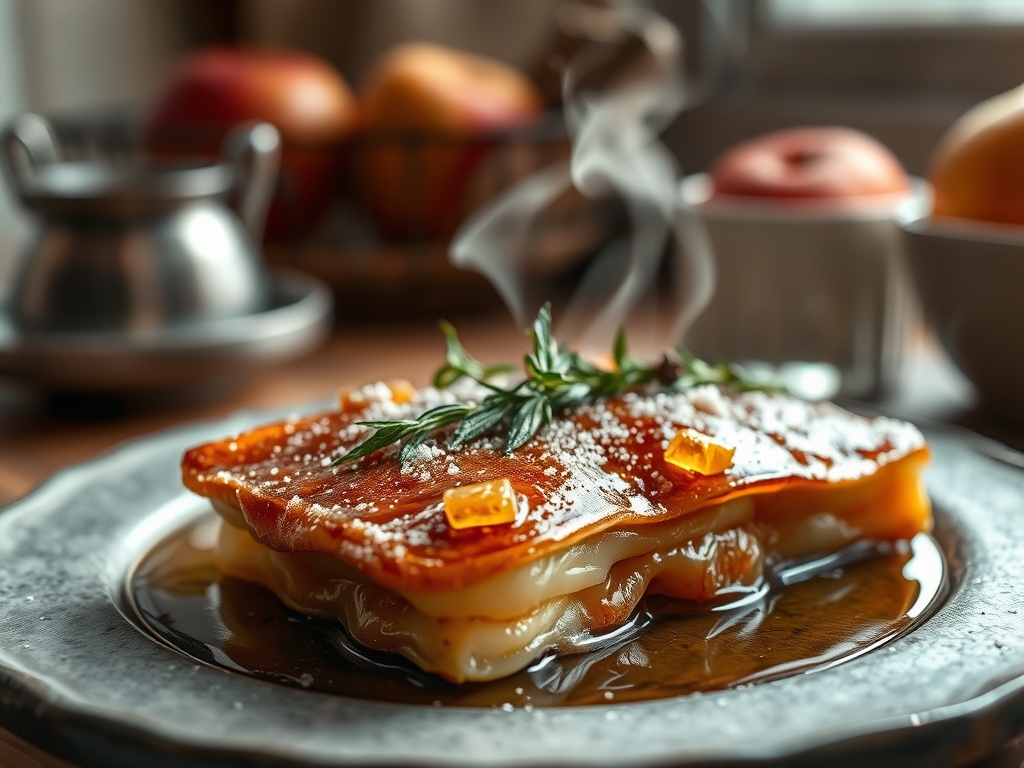
Look at the Masterclass photo: notice the "shatter-crust" texture and the deep; even bronzing. If your strudel looks pale; you likely under-buttered the exterior or your oven temperature was too low. If the strudel has burst at the seams; the filling was too wet or the roll was too loose. If the top is dark but the bottom is soggy; move the baking sheet to a lower rack for the final 10 minutes to ensure the base can infuse with heat. The visual cue for perfection is a "blistered" appearance on the pastry surface; indicating that steam has successfully separated the micro-layers.
THE DEEP DIVE
Macro Nutrition Profile:
A standard serving contains approximately 320 calories; 14g of fat; 48g of carbohydrates; and 3g of protein. The high carbohydrate count is driven by both the flour and the natural sugars in the apples.
Dietary Swaps:
- Vegan: Replace the butter with a high-quality vegan block butter or coconut oil. The dough is already naturally vegan if you use oil.
- Gluten-Free: This is the "Hard Mode" of baking. You must use a GF flour blend with high xanthan gum content; but be warned: you will not achieve the same paper-thin transparency.
- Keto: Substitute the flour with a mix of almond flour and psyllium husk; and use erythritol for the sweetener. The texture will be more like a tart than a traditional strudel.
Meal Prep & Reheating Science:
Austrian Apfelstrudel is best served within 4 hours of baking. To reheat; avoid the microwave at all costs; it will turn the pastry into wet cardboard. Use an air fryer or oven at 175C / 350F for 8 minutes. This re-crisps the fat in the pastry and restores the molecular tension of the crust.
THE KITCHEN TABLE
Why is my dough tearing?
Your gluten is likely under-developed or the dough hasn't rested long enough. Ensure you knead for the full 10 minutes and let it rest in a warm spot. Small tears can be patched with scrap dough.
Can I use puff pastry instead?
You can; but it ceases to be an Austrian Apfelstrudel. Puff pastry relies on laminated fat layers; whereas strudel dough relies on mechanical stretching. The texture will be significantly heavier and greasier.
Which apples are best for the audit?
Stick to Granny Smith or Braeburn. They have the cellular structure to withstand high heat without disintegrating into sauce; maintaining a pleasant "bite" within the flaky casing.
How do I get that professional shine?
Brush the strudel with a light apricot glaze or a simple syrup immediately after it exits the oven. This adds a reflective sheen and a final hit of sweetness to the crust.