Forget the watery, thin excuses for yogurt that haunt the supermarket dairy aisles; we are entering the realm of structural integrity and concentrated probiotic power. We are talking about Middle Eastern Labneh. This is not just a snack; it is a fundamental architectural component of the Levantine breakfast table. Imagine a substance so thick it holds the shape of a spoon, yet so smooth it dissolves on the tongue like silk. The scent is a sharp, piquant invitation, a lactic acid masterpiece that demands the accompaniment of high-quality olive oil and zesty za'atar. To master this, you must understand the physics of moisture migration. We are essentially performing a controlled dehydration of fermented milk, stripping away the liquid whey to leave behind a dense, creamy matrix of proteins and fats. It is a process of refinement. When you achieve the perfect consistency, the Labneh stands as a testament to patience and precise mechanical filtration. It is bold, bright, and unapologetically tangy. Let us strip down the process and rebuild your dairy repertoire from the ground up.
THE DATA MATRIX
| Metric | Specification |
|---|---|
| Prep Time | 10 Minutes |
| Execution Time | 12 to 24 Hours (Passive) |
| Yield | 450g / 2 Cups |
| Complexity (1-10) | 2 |
| Estimated Cost per Serving | $0.85 |
THE GATHERS
Ingredient Protocol:
- 950ml / 4 cups Full-fat Greek yogurt (plain, unsweetened)
- 5g / 1 tsp Fine sea salt
- 30ml / 2 tbsp Extra virgin olive oil (for finishing)
- 10g / 1 tbsp Za'atar spice blend
- 5g / 1 tsp Dried mint (optional)
Section A: Ingredient Quality Audit:
The primary failure point in Middle Eastern Labneh is the base yogurt quality. If your yogurt contains stabilizers like guar gum or carrageenan, the whey will not separate cleanly. These additives are designed to hold moisture in suspension; they fight against the gravity-fed filtration process. Technical Fix: Always source "pot-set" yogurt or brands where the only ingredients are milk and live active cultures. If your yogurt is too thin or "runny" out of the tub, increase your salt ratio slightly. Salt acts as a humectant that draws water out of the protein structure through osmotic pressure, accelerating the separation of the whey from the solids. If the flavor is too mild, allow the yogurt to sit at room temperature for 60 minutes before hanging; this encourages a final burst of microbial activity to sharpen the acidity.
THE MASTERCLASS
Step-by-Step Execution:
1. The Salting Phase
In a large stainless steel mixing bowl, combine the yogurt and sea salt. Use a silicone spatula to fold the salt thoroughly into the dairy. Ensure no pockets of unseasoned yogurt remain.
Pro Tip: Use a digital scale to measure your salt. Precise salinity is vital because salt breaks down the colloidal stability of the yogurt, allowing the whey to escape the protein mesh more efficiently.
2. Setting the Filter
Line a fine-mesh sieve with three layers of cheesecloth or a single high-density lint-free linen cloth. Place the sieve over a deep saucier or collection bowl, ensuring there is at least three inches of clearance between the bottom of the sieve and the floor of the bowl.
Pro Tip: Dampen the cheesecloth with filtered water before adding the yogurt. This prevents the cloth from absorbing the precious butterfat and ensures only the translucent whey passes through the fibers.
3. The Gravity Extraction
Transfer the salted yogurt into the center of the cloth. Gather the corners and tie them tightly with kitchen twine or a rubber band. Place the entire apparatus in the refrigerator.
Pro Tip: For a firmer, "ball-style" Labneh (Labneh Malbouda), place a heavy weight, such as a cast-iron press, on top of the bundle. This mechanical pressure forces the viscous liquid out faster, resulting in a texture similar to cream cheese.
4. Monitoring the Yield
Allow the yogurt to drain for 12 hours for a spreadable dip, or 24 to 36 hours for a firm, moldable consistency. Periodically discard the collected whey from the saucier to maintain airflow.
Pro Tip: Do not discard the whey. It is rich in riboflavin and minerals. Use it to infuse sourdough starters or as a piquant liquid base for marinating poultry.
5. The Final Embellishment
Unwrap the Labneh and transfer it to a shallow plate. Use the back of a spoon to create deep concentric circular grooves in the surface. Pour the olive oil into these channels and dust with za'atar.
Pro Tip: Use a bench scraper to smooth the edges if you are aiming for a professional, sharp-edged presentation. The oil acts as a lipid barrier, preventing the surface from oxidizing and drying out.
Section B: Prep & Timing Fault-Lines:
The most common human error is premature extraction. If you pull the Labneh after only four hours, the moisture content remains too high, leading to a "slumping" presentation on the plate. Temperature Control: Always perform the extraction in the refrigerator (below 4 degrees Celsius). While room temperature acceleration is possible, it risks the growth of spoilage yeast which can turn the flavor from "tangy" to "musty." If you find the Labneh has become too dry or crumbly, you can aerate it by whipping in a tablespoon of heavy cream or reserved whey to restore the desired silkiness.
THE VISUAL SPECTRUM
Section C: Thermal & Visual Troubleshooting:
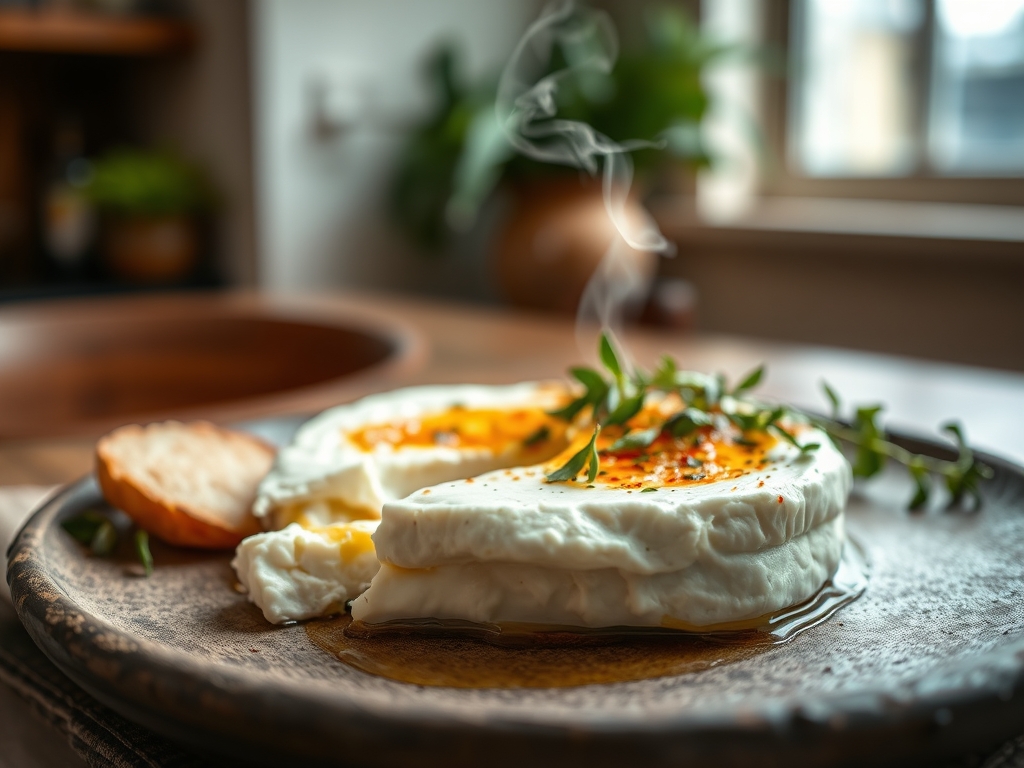
Referencing the Masterclass photo, your Labneh should exhibit a matte finish with a stark, ivory-white hue. If the surface appears "glossy" or "sweaty" before you add the oil, it indicates insufficient drainage time. Visual Cue: Look for "peaks" when you lift the spoon. If the peaks collapse, the protein structure is still too hydrated. If the color appears yellowish, your base yogurt may have a high beta-carotene content from grass-fed cows; this is aesthetically acceptable but indicates a richer flavor profile. If the za'atar looks dull or brown rather than vibrant green, your spices are oxidized. Technical Fix: Lightly toast the spices in a dry pan for 30 seconds to render the volatile oils before topping the dish. This restores the visual pop and olfactory impact.
THE DEEP DIVE
- Macro Nutrition Profile: Per 100g serving, expect approximately 160 calories, 12g of fat, 8g of protein, and 5g of carbohydrates. The concentration process doubles the protein density compared to standard yogurt.
- Dietary Swaps: For a Vegan alternative, use a high-fat coconut milk yogurt or cashew-based yogurt. Ensure it contains no thickeners. For Keto and GF followers, Labneh is naturally compliant and serves as an excellent high-fat, low-carb satiety tool.
- Meal Prep & Reheating Science: Labneh should never be reheated in a microwave as the high heat will cause the proteins to denature and "break," resulting in a grainy, separated mess. To maintain the molecular structure, serve it chilled or at room temperature. For long-term storage, roll firm Labneh into balls and submerge them in a jar of olive oil; this creates an anaerobic environment that preserves the cheese for up to three months.
THE KITCHEN TABLE
Why is my Labneh grainy?
This usually occurs if the yogurt was frozen or if you used a low-fat base. High heat during the fermentation of the original yogurt can also cause protein clumping. Always use full-fat, fresh yogurt for the smoothest emulsion.
Can I use a coffee filter instead?
Yes, for small batches. A coffee filter provides a very fine mesh that captures even the smallest solids. However, it is slower than cheesecloth and may require multiple filter changes to prevent clogging from the viscous solids.
How long does fresh Labneh last?
In an airtight container, it stays peak-fresh for 7 to 10 days. If you notice any mold or a change to a fizzy scent, the microbial balance has shifted, and it should be discarded immediately.
What is the liquid at the bottom?
That is acid whey. It is a byproduct of the straining process. It contains lactose, minerals, and vitamins. It is highly acidic, making it a perfect liquid to deglaze a pan after searing vegetables.